• Skip to primary navigation
  • Skip to main content
  • Skip to primary sidebar

Givens Creative

Life at the intersection of faith, nature, history and art

  • Home
  • About
  • Blog
  • Spiritual Direction
  • Publications
  • CCG Music
  • Contact
  • Show Search
Hide Search

Steve

Looking for Hope in all the Wrong Places

Steve · October 30, 2020 · 18 Comments

Sunset in southern Illinois. Photo by SJG.

It’s a cold and sunny day
here in St. Louis, following a number of days of cold and wet. Fall is sinking fast and winter is lurking in a tree somewhere not too far off, ready to sweep in like a red-tailed hawk on us unsuspecting varmints just doing our best to gather enough energy for the long road ahead. 

On top of all that seasonal analogy, of course, is the general state of the world. We’re still hunkered down and masked up (at least we are in my family and circle of friends) against a sneaky and unforgiving virus that scientists are still struggling to understand and create a vaccine for. The national election is a few days off and, no matter which side you choose and vote for, you are likely feeling a sense of foreboding and even fear about the results and what it will mean for the United States in the foreseeable future. The country and the world seem to be in a state of unrest, incivility and hopelessness that many of us have never experienced. 

It’s easy to lose hope, and perhaps it’s even easier to place our hope in the wrong things and people. I’m not here to tell you what’s right and what’s wrong. But since the theme of this blog has always been — broadly defined — about the intersection of God in our lives, I would like to make a few observations today and then leave you with a song and prayer of hope written by one of my very close friends and creative collaborators. 

First, a few observations about hope:

  • No elected official and no political party’s platform will restore hope to us; we will have to find a way to do that ourselves. 
  • If we hope for a better and more civil society, we will need to begin with the way we treat everyone around us and not look to leaders to emulate it. They will undoubtedly let us down.
  • If we hope to count ourselves among the friends of Jesus, we need to remember that when Jesus was asked about the greatest commandment, he didn’t lay out a complicated set of rules that told us if we could be in his inner circle or not. He just said: “Love God and love your neighbor as yourself.” There’s hope in that. 
  • And if you’re not sure who your neighbor is or think it is just those people who live in your neighborhood and look, love, believe and act like you, remember again the words of Jesus in the parable of the good Samaritan: “Our neighbors are those in need.”   

There is, despite all evidence to the contrary, reason for hope right now, but only if we are are willing to recommit ourselves to the teachings and love of Christ and only if we’re willing to do the hard spiritual work of using those teachings of love, forgiveness and grace as the foundation for the way we interact with the world. 

Still, we may find it hard to hope right now. 
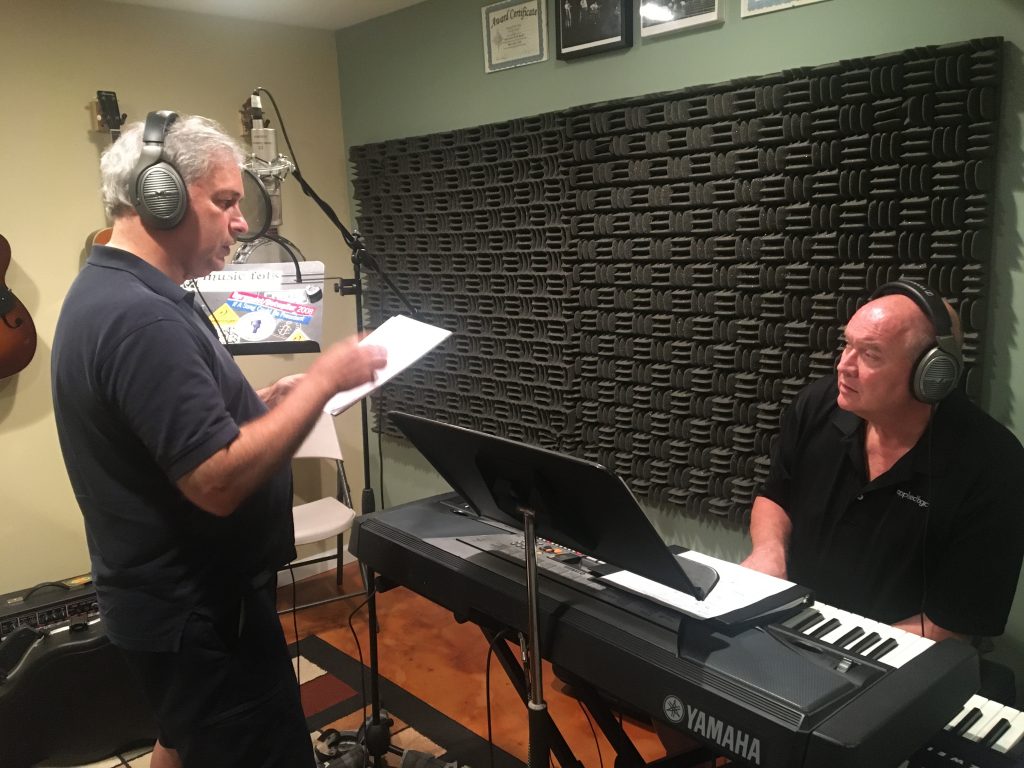
My friends and collaborators John Caravelli, left, and Phil Cooper, working out the arrangement of “It Looked Like Hope.”

“We have all been there,” writes my friend and collaborator John Caravelli. “You may call it emptiness, a dry spell or a dark night of the soul. Many of us are feeling that way right now and for good reason. We are in the midst of a deadly pandemic. This election season has been filled with uncivil discourse, reported to us incessantly via social media and a 24-hour news cycle. We are experiencing the consequences of racial divisions and climate change. Whatever the reason, we can all find ourselves feeling lost, angry or sad for periods in our lives.”  

Acknowledging all those emotions and yet holding out for something better, John wrote a song not about the darkness but the light, about what we experience when the heaviness lifts.  
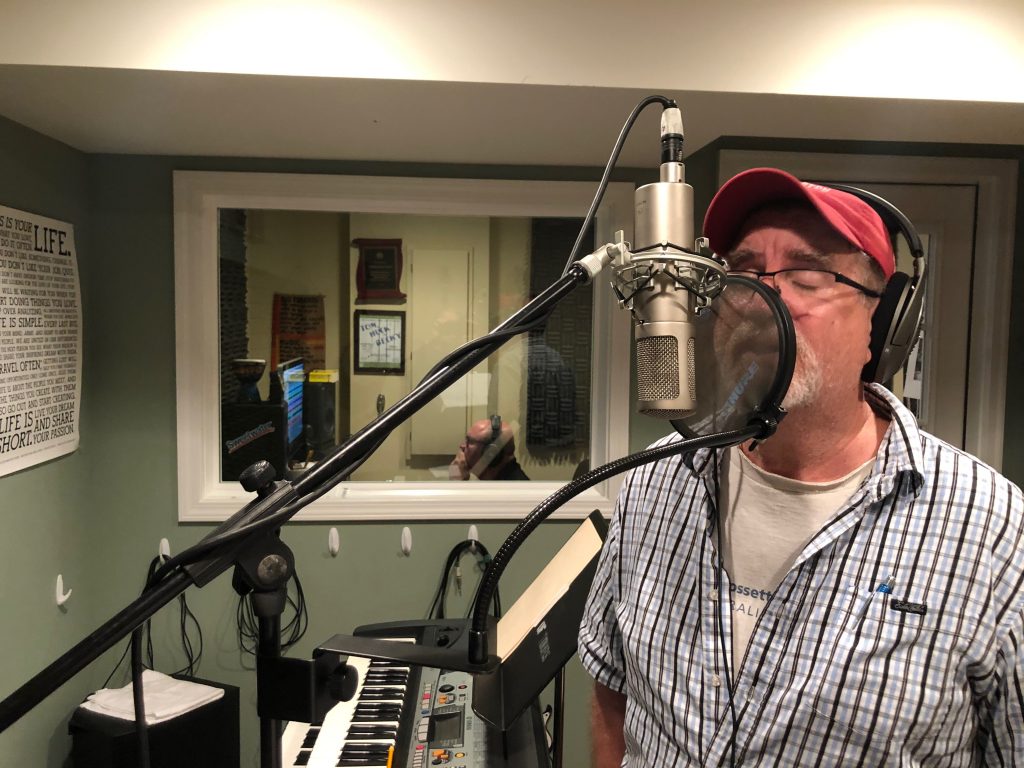
That’s me, singing. Photo by John Caravelli.

“Very often, it’s not something you can really identify, but you know when it happens,” he says.  “Suddenly, you notice more about what is right with the world and not only what is wrong. You see the beauty, the kindness, the love and the blessings. Despair gives way to hope, as it should.”

John wrote the song, “It Looked Like Hope,” about the experience of searching for hope in all the right places — in an autumn day, by the light of a full moon, in the dawning sun, in places where we might least expect to find it — and finding in those still moments not just beauty but the very face of God; of knowing, like Julian of Norwich, that “all will be well and all will be well.” That God is near, no matter how we’re feeling about it. 

John let me do the singing while he played guitar, and our friend and third collaborator in the CCG songwriting trio, Phil Cooper, played the keyboard. John and I produced the video below, and I added a quote at the end from John’s favorite saint, St. Therese of Lisieux, which seemed to sum up how we were feeling, or at least hoping:

Above the clouds, the sky is always blue.

It Looked Like Hope

It’s been a long time coming
It’s been a long time tired
I’ve been lost and angry
As if some evil fates conspired.

Dark autumn wind blew all day
There was a hunter’s moon last night
It shone through my bedroom window
My bed glowed in the Lord’s moonlight.

And when the dawning sun broke through the clouds,
From my dream as I awoke,
I believe I saw the face of God
I believe it looked like hope.

But there’s an end to every dark road
The light will shine at last
A song of hope will deliver you
From a helpless lonely past.

I believe I heard the angels sing
A pure and simple song
To relieve me of the mournful tune
I’ve been singing much too long.

And when you least expect it
In a dream that you have, in a song that you hear 
It’s then that you know 
That all will be well, and all will be well
That your God is near, that your God is near

I believe I heard the angels sing
A pure and simple song
To relieve me of this mournful tune
I’ve been singing much too long.

And when dawning sun broke through the clouds,
From my dream as I awoke,
I believe I saw the face of God
I believe it looked like hope.
I believe I saw the face of God
I believe it looked like hope.

Words and music by John Caravelli. Copyright 2020 Potter’s Mark Music.

Leadership: Stewardship and Awareness

Steve · August 22, 2020 · 6 Comments

Artwork by Steve Tadrick

[Third in a series of posts about being the kind of servant-leaders the world needs.]

Last weekend, Sue and I spent a few days away from home (our first small trip since the onset of COVID-19), in Missouri Wine Country, a stretch of beautiful and rich land just west of St. Louis in the Missouri River Valley. 19th-century Germans immigrated here in large numbers and, finding the land of little use for much else, discovered that it wasn’t bad for grapes. It’s no Napa Valley, perhaps, but it was at one time America’s largest producer of wine and was designated the nation’s first American Viticultural Area (AVA) in 1980.

It’s a long and complicated history, interrupted by prohibition and anti-German sentiment around the time of both World Wars. But spending time amidst this landscape that boasts both natural and cultivated beauty was a reminder of the importance of stewardship of the land and, by extension, stewardship as the proper model for servant-based leadership. 

For stewardship, as it relates to leadership, implies something more than supervision, oversight or authority. Stewardship begins with a deep awareness and care for whatever it is we are stewards of. Winemakers, like many others who steward the land, have a deep understanding and awareness of all their land holds and promises, so they care deeply for what is in their care and oversight. They rejoice with each great vintage and die a little when hard frost, pests, drought (or too much rain) interfere with the work of turning vines into wine.

Whatever and whoever we lead, we would do well to emulate the model of stewardship, the central point of which is that this organization (or this piece of land) is not ours for the taking but, rather, ours for the caring. As Pope Francis said in remarks during a meeting with political, business and community leaders in Quito, Ecuador, in July 2015:

“We received this world as an inheritance from past generations, but also as a loan from future generations, to whom we will have to return it!”

The same can be said of any organization, and it should be that same ethos of care and stewardship that guides us if we are called to help lead it. At the core of this kind of leadership is our awareness of God’s presence in everything, and this sense of God’s presence consoles and guides us to make good decisions and lead with love and care. To be true servant-leaders means knowing that God is at the heart of all we do. This awareness becomes prayer itself, and then our prayer grows out of ourselves and becomes action.

We become servant-leaders and “contemplatives in action” when we use (and offer back to God) the gifts we have been given without stifling, distorting or wasting them. These gifts — our temperament, character, education, experience, skills, creativity and much more — add up to what it is we have to offer the world and the organizations we lead. 

Where and how we meet people in our daily walk and work is where and how we meet God, and it is our obligation to “never resist that call,” as St. Ignatius once wrote to one of his young companions, writing that his encouragement was like the old proverb of “spurs to a willing horse.” We are called to be that willing horse, accepting the gentle (if sharp) nudge of God to move ever forward in our lives of service.   

Greetings from the Missouri River Valley

So we need ask ourselves: 

Can we meld and balance the “being” and “doing” of our lives? 

Is our service to others “large-hearted and humble?” (Pedro Arrupe SJ) 

Can we draw energy by being radically centered in Christ and transform that energy into loving, creative, generous, compassionate, healing service to others? 

Leadership: St. Ignatius and Compassionate Leadership

Steve · August 15, 2020 · Leave a Comment

Artwork by Steve Tadrick

[Second in a series of posts about being the kind of servant-leaders the world needs.]

St. Ignatius of Loyola, the 16th-century founder and leader of the “Company of Jesus,” later to be called the Society of Jesus or the Jesuits, was a tough, fearless military man. He was wounded in battle helping face down a much larger force. Those closest to him in his post-military days remembered him as a man who led with compassion and encouraged and nurtured friendships among his companions. He led like a loving father, making no distinctions between his charges. No favorites. And like a good father, he could be strict while being gentle, and he tended to see the good in others. Because of his approach to leadership, he was admired, readily followed and loved. 

He also insisted on unity of purpose and mission, and at the center of that unity was his companions’ love for God. From this mutual love of God came a conformity of spirit that would ultimately lead the Jesuits to preach the Gospel around the world and establish some of the world’s leading educational institutions. Although spread throughout the world even during his lifetime, he nurtured this sense of unity of purpose among all in the company.

This is leadership based on love and the common good, on passion for the work and compassion for fellow workers. It is a model of leadership for all Christians and reminiscent of the days of the early church, as Bergan and Schwan write in “Praying with Ignatius of Loyola” (Saint Mary’s Press, 1991): 

“Jesus called all Christians to build community through mutual concern, compassion, sharing, and developing friendships. Indeed, at the very beginning of the Church, people pointed to the Christians and remarked on how they loved one another.”

Are we still living up to that ideal as a people of faith? “Being a leader” so often equates to questions of “who’s in charge?” and “to whom do I report?” These reporting lines are not unimportant in most organizations, but the kind of compassionate leadership fostered by St. Ignatius and so many others extends far beyond organizational charts and into the realm of creating organizations that work always toward the common good, the common goal, and unity of purpose. Leadership that sows discontent, especially within an organization, is not leadership at all, nor is leadership based on a cult of personality of the leader.  

Ignatius was strong, yet gentle and flexible, able to adjust to the needs of others. He guided others with love and an intuition that sprang from a life of prayer and awareness. He encouraged others’ strengths while being aware of their sensitivities, emotions, and fragilities. He was a master of fitting the job and his direction to the individual. 

So, when we are asked to take on leadership roles and responsibilities within our places of work, worship or service, we might be wise to ask how we can best emulate the care that Ignatius showed to those in his company. Are we leading because we want to be seen as a leader or because we believe we can make those with whom we work feel more important, needed and valued?

Ask yourself:

Am I consistent and fair in my support and affirmation of those who work with me?

Do I nourish life-giving relationships?

Do I cope well with differences and diversity or demand uniformity at all costs?

Do I work to enable and enhance the work of others?

Do I pray for the people I lead?

Leadership: Standing Still and Stepping Out

Steve · August 9, 2020 · 12 Comments

Artwork by Steve Tadrick.

(First in a series of posts about being the kind of servant-leaders the world needs.)

Generally speaking, Sue and I enjoy sleeping through a good thunderstorm, but last night Mother Nature put on a display of thunder, lightning, driving wind and incessant downpour that made us jump out of bed a few times just to make sure the world hadn’t come to an end and our house wasn’t floating away.

Luckily, the morning brought some cool and calm, and we spent a good chunk of the morning on the back porch watching the gold and house finches, chickadees and hummingbirds visit our feeders out in their storm-soaked world. They seem no worse for the wear. The squirrels go on as ever, and that’s a story for another time. Someday soon, I intend to write an insightful essay about how to love the pesky “squirrels” in our lives. But as they just recently destroyed another birdfeeder, that time is not yet.

As always, there seems to be a lesson to be learned from the two great works of “scripture” in our lives — nature and the written word of God. Today, both are speaking to me of resilience and of the necessity of finding pieces and places of quiet and solitude in order to be effective leaders — at home, at work, in our churches and other organizations.

Today’s readings (for the 19th Sunday in Ordinary Time, for those of you who follow the liturgical cycle) give us two stories that resonate with the storm that was thrown at us last night. With last night’s tempest still lingering in the air and in my memory, we get stories from both the Old and New Testaments about finding God in the storm. The lessons are clear, especially for leaders who frequently find themselves trying to navigate themselves and others through the most recent cloudburst. (I almost wrote “unexpected cloudburst” but that would be poor leadership indeed, huh? For the storms, however far apart, will always return.)

In the first reading (1 Kings 19:9-13), we are reminded that sometimes being a leader requires us to channel our inner Elijah, standing at the mouth of a cave (at the front of our organizations?) amid strong winds, crushing rocks and consuming fire and still having the faith and the wherewithal to seek the quiet whisper of God’s voice that says, “Here I am, never mind the storm.” If we’re going to lead others effectively through rough times, we need to put ourselves in the right place to hear that voice. That “place” is a regular return to prayer — to quiet, to solitude, to “silence,” even when the world and those in it seem intent on screaming in our general direction.

In today’s gospel reading from Matthew 14, we read the well-known story of Jesus walking on the water to comfort his friends, stranded as they are in a storm-rocked boat in the Sea of Galilee. Jesus, compassionate leader and teacher that he is, leaves his needed place of quiet and solitude and prayer (see above!) and sets out to help his friends, walking on the waves to prove his point and get their attention. For the floundering, fearful, faltering followers (and future leaders) in the boat (that’s us, too) the lesson is obvious: When we’re getting hit hardest, when we are most confused about what to do, we need to look beyond our abilities to navigate a storm by ourselves. We need to watch for Jesus walking and working in the most unlikely of places — perhaps where we seem least likely to find him even though we ought to know better by now. Like Peter, we need just enough faith to step out of the boat and into the storm instead of cowering in the bow and waiting for it all to pass.

We seek God in quiet. We are nourished and calmed by that presence. But we also must be prepared to wade into the depths and find a hand waiting for us. Alone, it can all seem too much to bear. With that hand in ours, it’s still not a walk in the park on a sunny day. Storms always return. But that hand is enough. We never lead alone.

Standing Between Hopelessness and Hope

Steve · July 17, 2020 · 6 Comments

Balanced. Sedona, AZ. SJG photo.

This originally appeared as a “Faith Perspectives” column in the St. Louis Post-Dispatch on July 13, 2020.

Over the past few weeks, I have taken part in more than a few online, faith-based presentations and dialogues focused on issues surrounding racial injustice in America. But even as we gather to help find our places and voices in the ongoing conversations, protests and proposed solutions to racial injustice and violence, we find ourselves in the liminal and paradoxical space that exists between hopelessness and hope.

With the exception of presenters and panelists who are people of color, these have been, by and large, conversations among white Catholics who profess to care deeply about the injustice and violence experienced by so many of our black and brown brothers and sisters.

We have gathered at the request and invitation of a wide range of Catholic institutions and religious orders, including the Archdiocese of St. Louis, the Marianists, the Jesuits and the Dominicans, and no doubt there were many more of these happening that I did not attend. As a Church, we’re good at gathering. It is the act of gathering, indeed, that makes us Church.

Of course, we all expressed that we feel helpless because the issues are so big, so old and so seemingly impossible. The virtual venues changed, but the questions remained the same: What should we be doing? What is our role here as a Church and as people of faith? We want so much to be hopeful. We search for signs that this time is different and find glimpses of goodness and light. We see more people who look like us taking part in peaceful protests. We see parents doing their best to learn about and explain racism to their children with a belief that they can, over time, slow or break the unrelenting and terrible cycle.

Some Catholics are becoming bold and outspoken in their belief that they cannot be prolife for unborn lives and not when lives are adolescent or adult and black or brown. We see more people willing to pause their lives and listen to and learn from others who live and experience racism every day. But talk is never enough. Education alone is never adequate. Faith without works is dead.

Despite what centuries of European art and iconography try to reveal, as Christians we pin our hope on the life, death and resurrection of a brown, Jewish man from a working-class village in the Galilean countryside. He doesn’t look like us. Surely, somehow, we can choose to remember that fact when we are tempted to think that the current unrest has nothing to do with us.

Jesus, if he was walking the earth today, would look less like the people gathered on my Zoom conference call and more like the gentlemen from Mexico or El Salvador who mow the grass in my neighborhood. He would look more like George Floyd or Rayshard Brooks than the people I gather to worship with on Sunday. So the questions we must ask are straightforward: How would we treat Jesus if we caught him running through our neighborhood late at night? What would we say about him and what would we call him if we thought he wasn’t listening? What excuses would we make about how he “had it coming” even as we drove the nails into his hands?

And yet there is room and need for hope, and so I will kneel and pray to God for the gift of hope in the midst of hopelessness. I will incline my ear and wait in hope for a response from a God who I believe listens to his people. But like people of all ages and colors who have prayed for so long and so hard for that same hope, I will ask God to please hurry.

  • « Go to Previous Page
  • Page 1
  • Interim pages omitted …
  • Page 11
  • Page 12
  • Page 13
  • Page 14
  • Page 15
  • Interim pages omitted …
  • Page 75
  • Go to Next Page »

Primary Sidebar

Subscribe to Our Newsletter

Check your inbox or spam folder to confirm your subscription.

Categories

  • A (Very) Short Story
  • Being There
  • Blessings
  • Book Reviews
  • Chemotherapy
  • Christmas
  • Creative Spirit
  • Creativity
  • Games We Played
  • Guest Bloggers
  • History
  • House concerts
  • Ignatian Spirituality
  • Leadership
  • Music
  • My Soundtrack
  • Nature
  • Notes from a Lecture
  • Photography
  • Poetry
  • Prayer
  • Scripture
  • Songwriters
  • Spirituality
  • Sports and Culture
  • Stem Cell Transplant
  • STLToday Faith Perspectives
  • Today's Word
  • Travel
  • Two Minutes
  • Uncategorized
  • Vocation & Call

Recent Comments

  • Steve on All Signs Point to the House of God
  • Steve on We are the Leftover Fragments
  • Chris on We are the Leftover Fragments
  • Pat Butterworth on All Signs Point to the House of God
  • Steve on Wonder as the Foundation of Prayer

About the Author

Steve Givens is a retreat and spiritual director and a widely published writer on issues of faith and spirituality. He is also a musician, composer and singer who lives in St. Louis, Mo., with his wife, Sue. They have two grown and married children and five grandchildren.

Read More >>>

Recent Posts

  • For Just One Night – Hope and Peace
  • Let’s Go Around the Table (in Detail)
  • All Signs Point to the House of God
  • Wonder as the Foundation of Prayer
  • We are the Leftover Fragments

Recent Posts

  • For Just One Night – Hope and Peace
  • Let’s Go Around the Table (in Detail)
  • All Signs Point to the House of God
  • Wonder as the Foundation of Prayer
  • We are the Leftover Fragments
  • Home
  • About
  • Blog
  • Spiritual Direction
  • Publications
  • CCG Music
  • Contact

Reach out to connect with Steve Send an E-mail

Copyright © 2026 · Built by Jon Givens · Log in