• Skip to primary navigation
  • Skip to main content
  • Skip to primary sidebar

Givens Creative

Life at the intersection of faith, nature, history and art

  • Home
  • About
  • Blog
  • Spiritual Direction
  • Publications
  • CCG Music
  • Contact
  • Show Search
Hide Search

Prayer

Let’s Go Around the Table (in Detail)

Steve · November 27, 2025 · Leave a Comment

To prevent any “spoilers,” I’ll just say I was doing an unnamed online word puzzle this morning. I quickly figured out it was asking me for words that you might normally hear while going around the Thanksgiving table and asking everyone to name those things for which they were most grateful. Let’s just say there were no surprises.

[If you haven’t done all your daily online word puzzles yet, you might want to stop reading now and come back later…]

These generic answers were all well and good as far as this annual exercise in gratitude goes, of course. The answers were all important “things” for which to be grateful. But, as I was taught a long time ago by one of my writing teachers, never use the word “thing” when you can be more specific. There’s more power and meaning in the details and in giving the “things” in our lives names.

So, as you go around the table today, I challenge you to outlaw the word “thing” and other generic words like family, life, home, friends, health, work, community, and food. Make them think harder and go deeper. Ask them for the details, for that’s where real meaning is. God, after all, is in the details of our lives. God is the giver of “life,” of course, but also the giver of specific moments, people, places and memories. Maybe ask these questions and require a “why” follow-up:

  • What was your favorite family moment this year?
  • When did you feel most alive?
  • Who are your three best friends right now?
  • What have you done this year to improve your health?
  • When did you feel most challenged by work or study?
  • When did you feel most a part of your community, neighborhood, church or school?
  • What’s the best meal you had this year? What’s your favorite food?

The stories we tell around the Thanksgiving table matter. They matter for the kids who are creating the memories they will carry forward to their own futures and families. They matter for the old folks who are searching for meaning and joy in their elder years. The things for which we are most grateful (and the details that describe them) speak most clearly of what we treasure.

And remember: “For wherever your treasure is, there will you find your heart.” (Matthew 6:21)

All Signs Point to the House of God

Steve · October 30, 2025 · 2 Comments

We just kept following the signs. 

Sue Givens at Monet’s famous lily pond bridge.

One day near the end of September, Sue and I and our good friends, John and Karen, spent the morning walking through Claude Monet’s famous garden in Giverny, a small village in France’s Normandy region where the Epte flows into the Seine and where the impressionist master lived and worked from 1883 until his death in 1926. It’s the one with the water lilies and the green footbridge crossing the small pond, of course. No doubt you’ve seen the pictures. 

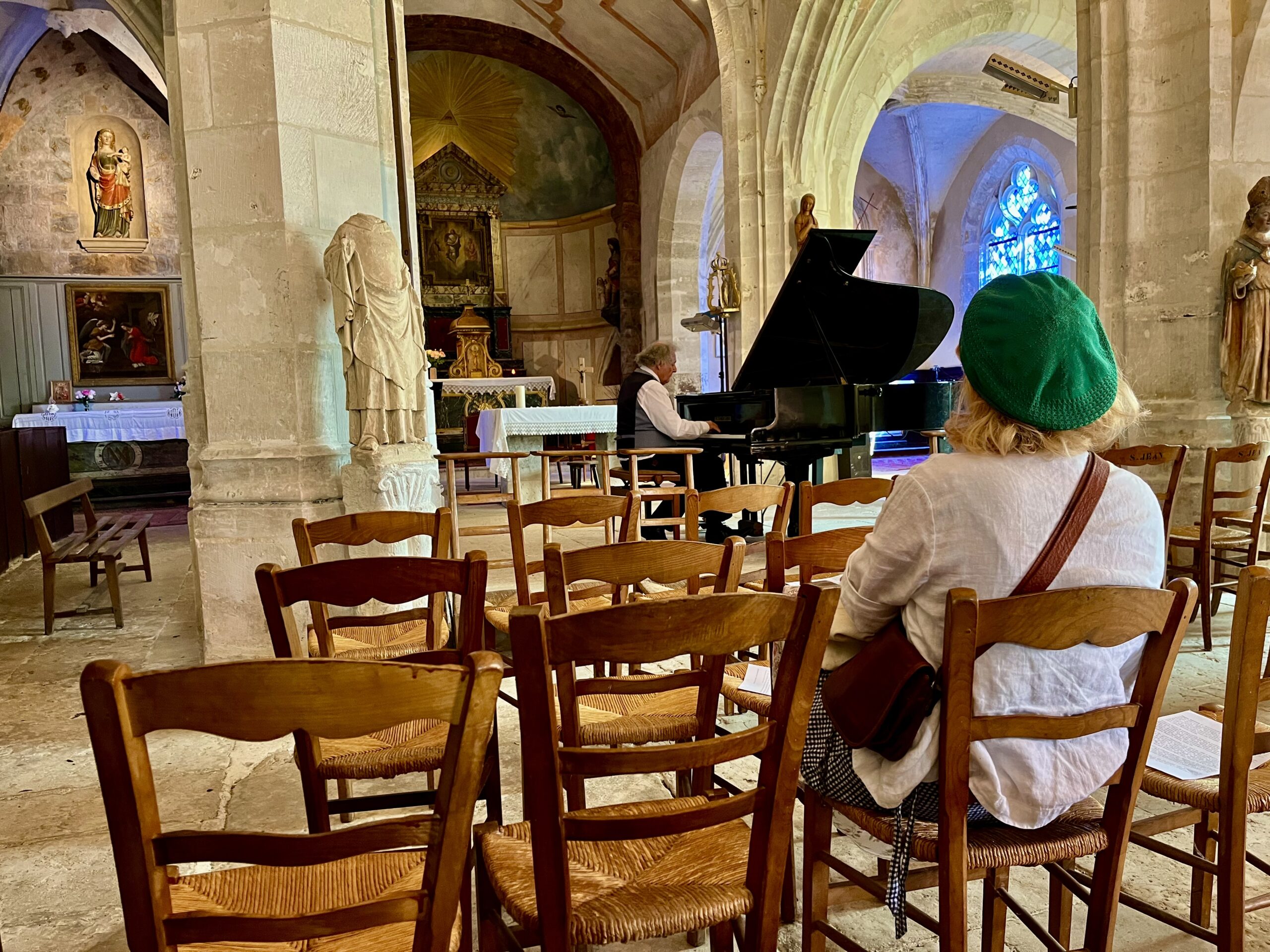
While there, we followed the signs, first through the tunnel under the road to the water lily pond and then back through the tunnel to the rest of his gardens and home. It was an exquisite, unhurried morning in an unforgettable place. As we made our way back through the village’s main street, the aptly named Rue Claude Monet, we kept seeing flyers advertising “daily piano concerts” in the village church. We decided to follow the signs, which isn’t very hard to do in a town with one main road.  

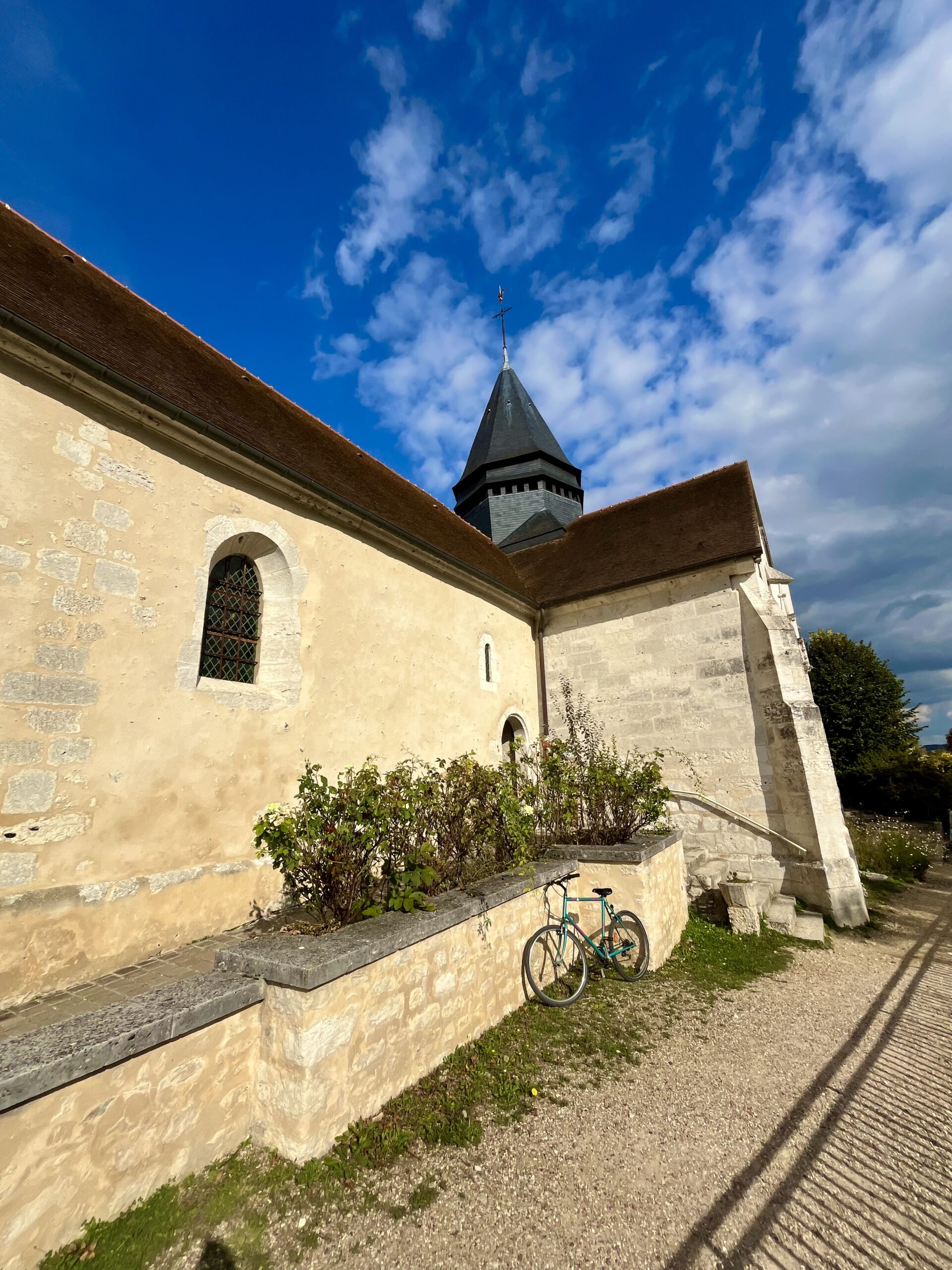
We arrived at the Church of Sainte-Radegonde, where Monet is buried and where the daily classical “improvisational” piano concert was advertised featuring someone named Hughes Reiner. Not knowing what to expect, we ducked into the dimly lit church and waited for our eyes to adjust before finding a seat among a handful of others. It quickly became evident to all of us that we had been dropped into the middle of something very special. 

Reiner, it turned out, is a rather famous pianist, composer, opera singer, choirmaster, and conductor who lives locally but who has played all over France and Europe. Without much classical music knowledge, I don’t have many words for what we heard but it was certainly as exceptional as his resume was long. He was truly an extraordinary, intricate (and fast) pianist, and we sat mesmerized by his playing, with not a note of music in front of him.

As we were about to leave, I noticed an ornate, calligraphed sign near one of the side walls of the church. It was, of course, written in French, so I had no idea what it said. John snapped a photo and loaded it into an app that translated it in seconds. He passed me his phone and I read: 

You have entered this house.
The house of God.
Whoever you are, He welcomes you.
With your joys, your sorrows.
Your successes, your failures.
Your hopes, your disappointments.
Be welcome.
Generations before you have loved this place,
have contributed to building it, to making it beautiful.
They prayed here.
Respect the peaceful silence.
If you are a believer, pray.
If you seek, reflect.
If you doubt, ask for light.
If you suffer, ask for strength.
If you are joyful, give thanks.

And may you remain here.
Whoever you are, He welcomes you.
Welcome Him. too.

The translation as I repeat it here may not be complete or perfect, but the moment was transcendent, a simple reward for following and reading the signs. It was a reminder that God gives us these signs on a daily basis, wherever we are, if only our eyes are open wide enough to see and read.  

Wonder as the Foundation of Prayer

Steve · August 31, 2025 · 3 Comments

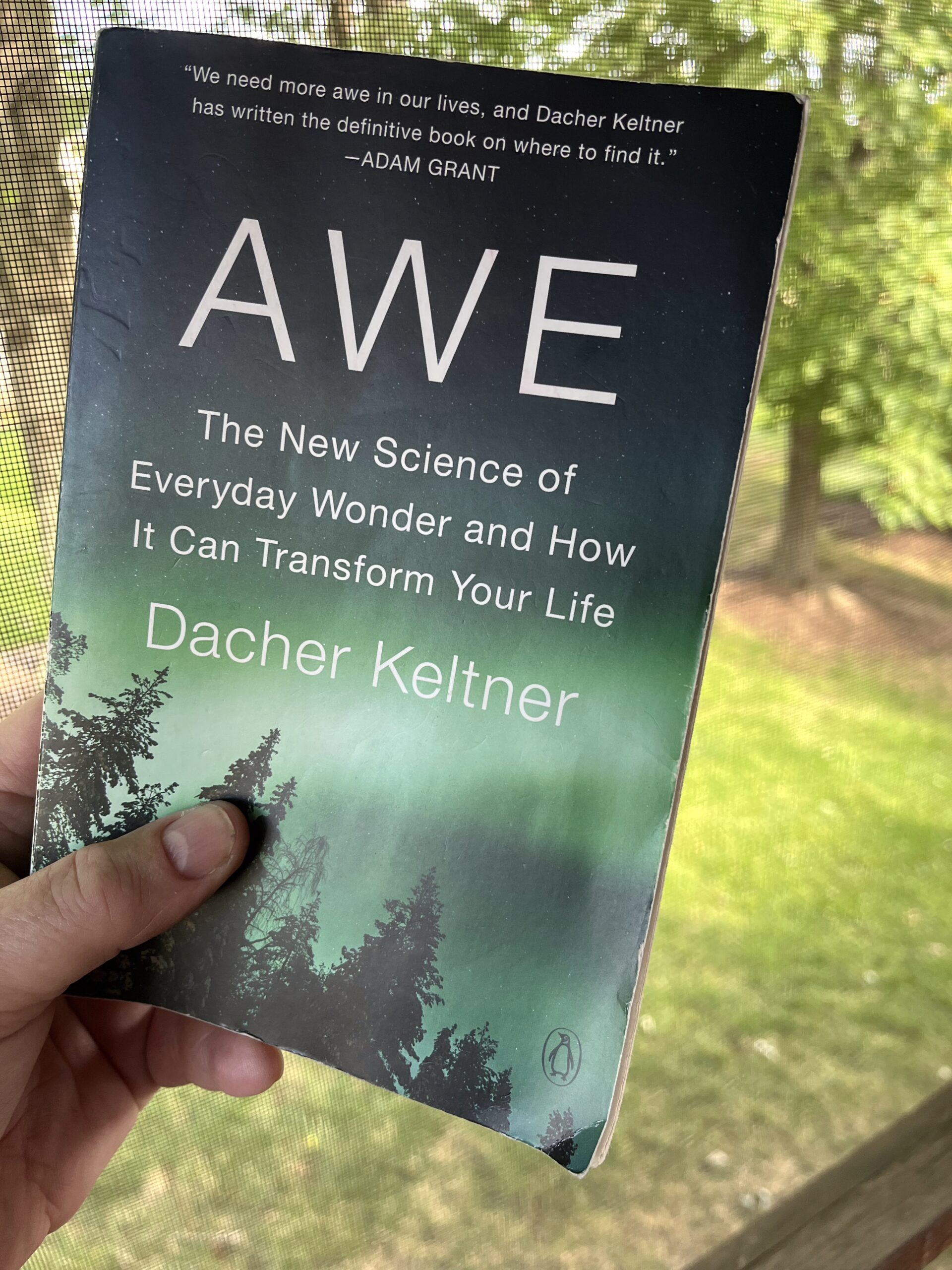
Earlier this summer, I read the book, “Awe: The New Science of Everyday Wonder and How It Can Transform Your Life,” by Dacher Keltner, an expert on human emotion and a professor of psychology at UC-Berkeley, where he serves as the director of the university’s Greater Good Science Center. In the book, Keltner sets out to define what we mean by “awe” and illustrates the experience of awe through dozens of individual stories gathered from around the world.

And, indeed, it’s the global experience of awe that makes this book worth reading. We are all moved, he writes, by experiences that make us draw in a sharp breath and let out the slow sound of “awe” or maybe “wow” or “woah.” In this sense, in what moves us, we all speak the same language, and there is something very important about understanding that.  

For the purpose of the book and drawn from his own deep research, Keltner defines awe as: “The feeling of being in the presence of something vast that transcends your current understanding of the world.” It is about “our relation to the vast mysteries of life.” These experiences, he writes, come from the “eight wonders of life,” which can be classified into a “taxonomy of awe.” They are, in order of their commonality around the world:

  • Moral Beauty – other people’s courage, kindness, strength and overcoming.  
  • Collective Effervescence – those moments when, as part of a crowd (whether at church or a sports stadium) we feel we are part of a collective self or tribe – an experience of “we.”
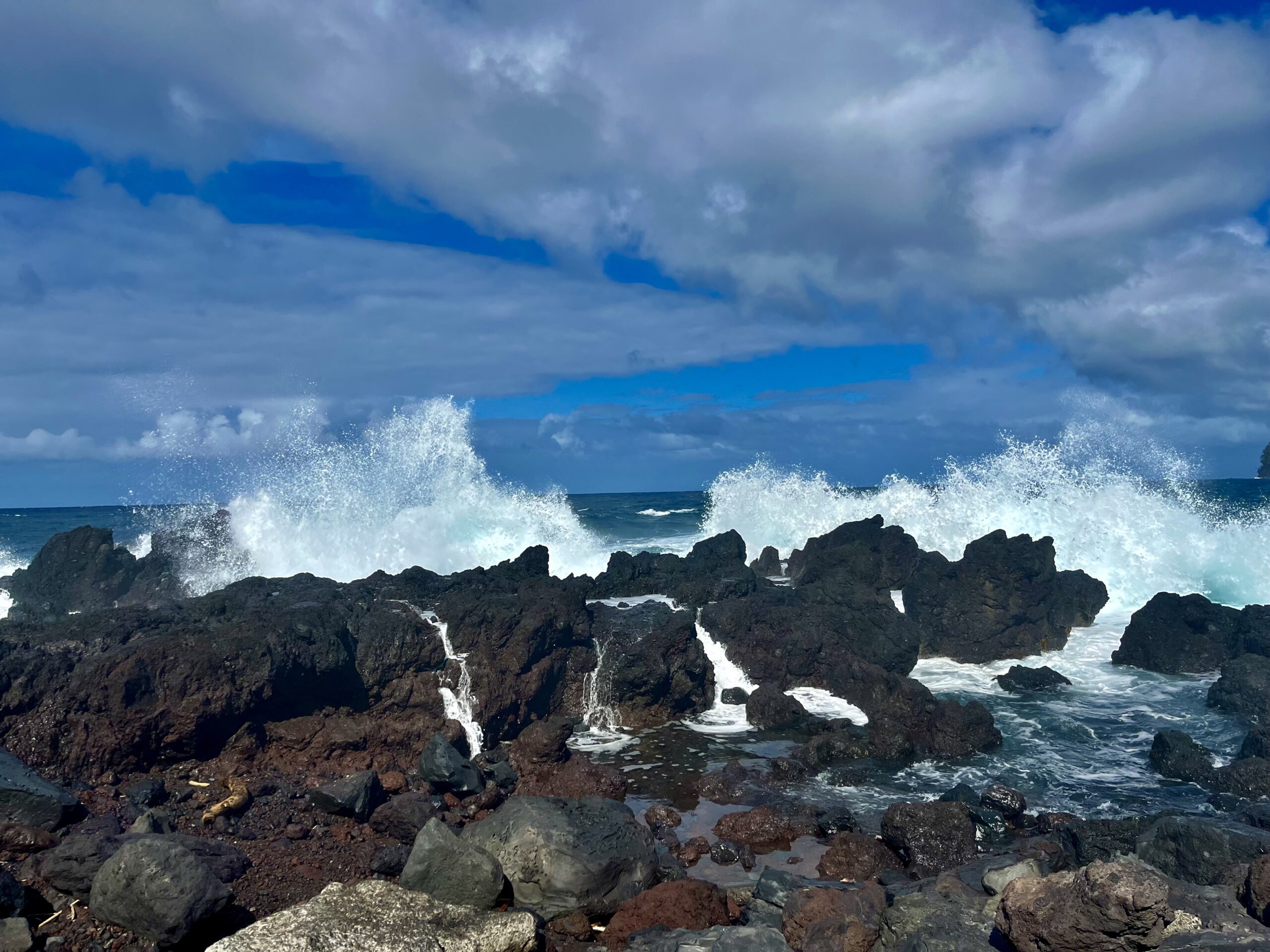
  • Nature – not surprisingly, our experience in and of nature can often leave us speechless and with a sense of “something bigger” at work.
  • Music – and its ability to transport us to “new dimensions of symbolic meaning.”
  • Visual Design – art and architecture and its power to open our minds to new ways of perceiving the world and “locate ourselves” within the cultural systems that surround us.
  • Stories of Spirituality and Religion – and the way they transform, transcend, and give us hope for something more.
  • Stories of Life and Death – are common around the world and lead to awe at such moments as first and last breaths.
  • Moments of Epiphanies – times when we suddenly understand essential truths about life and experience “philosophical insights, scientific discoveries, metaphysical ideas, personal realizations, mathematical equations, and sudden disclosures that transform life in an instant.”

While you likely won’t find Keltner’s book on the “spirituality or religion” section of your local bookstore or online category, I found it to be a great tool for my regular prayer of reflection and examination of my day – my “examen,” as it known in Ignatian spirituality. Keltner’s “eight mysteries” opened my mind to looking for and finding God in an ever-wider array of my life experiences.

Shortly after finishing the book, I began to wonder: What if I paid a little closer attention every day to what astounds me and fills me with awe and wonder? What might I see and experience each day because I am looking for the awe? What if I expanded my time of reflection to look more broadly and consider those eight areas of mystery? What if this was the way I ended each day, with this examen of awe?

At this point in time, I am two months into a project to record one such moment of awe each day. What I am finding thus far is a much wider set of experiences, all of which cause me to either catch my breath, drop me to my knees, or stand in quiet reflection and gratitude.

Here are two examples:

July 13 – Today Sue and I walked a half-mile loop trail that lead to the Akaka Waterfall on the east side of the Big Island of Hawai’i near Hilo. As it finally came into view, this long, 400-foot ribbon of water took my breath away — a sudden and short intake of breath that amounts to “awe.” It plunged over the edge like an Olympic diver, cutting like a knife into the pool beneath it. Perfect in form, a quiet and perfectly straight line into the folding water. And so I prayed: “Cut me like a knife, O Lord, sever me from myself to allow you in. Pierce my heart and allow me to feel the height and depth of your love and compassion for me. Fill me, just as this water continually fills the bowl that rests beneath the falls like open hands.”

August 30 – This morning we went to a funeral for our friend’s 94-year-old father. We didn’t know him or were not even sure we had ever met him. We were there because we believe it’s important to “show up” for people in their times of grief and need. We believe in the beauty and sanctity of the “last rites” of the Catholic Church, that they are fitting ways to celebrate the end of earthly existence and be present as something new begins. I was awed by the flow of music, scripture, ritual, words of remembrance, all encouraging me to consider my own life and death. With the responsorial Psalm, drawn from the oft-used 23rd Psalm, we sang: “Shepherd me, O God, beyond my wants, beyond my fears, from death into life.” And I think that this is what I want most when my time comes – for God to show up and shepherd me home, surrounded by the presence of those I knew and loved, and maybe a few others who show up to be there for my family, even if they have never met me. There’s awe in the way we humans (and the church) care for each other.

So here’s my challenge to you today: Pay attention to what catches your heart, your breath, your sense of being in the world, for God is in that moment.

Celebrating 40 Years of Living Faith

Steve · April 2, 2025 · 2 Comments

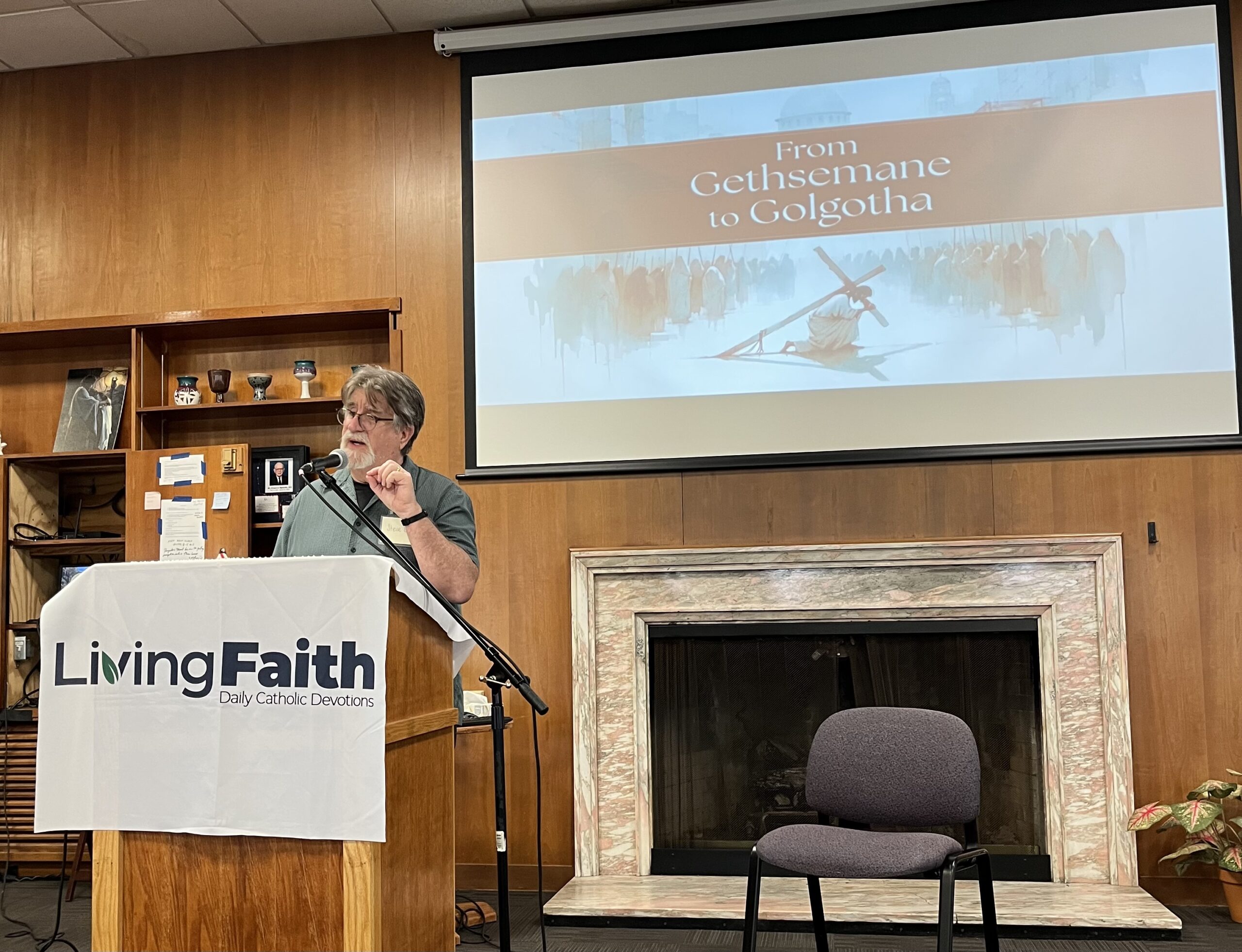
This past weekend, I helped lead a retreat celebrating the 40th anniversary of the daily devotional Living Faith at the Marianist Retreat and Conference Center just outside St. Louis. I know that many of you are familiar with Living Faith and its impact. I am grateful for my long affiliation with Living Faith, having been a contributor for about 37 of those 40 years! I estimate I’ve written about 600 reflections over the years, and I can still remember the excitement of that day back in 1987 when my first reflection was accepted.

Speaking of remembering…I thought I would share with you a small part of one of my retreat presentations – about the importance and spiritual benefit of prayerfully remembering our lives of faith and the goodness of God over the course of our lives:

When we remember, we begin the process of gathering up the fragments of our lives (we re-member them) so we can tell our stories, along the way revealing patterns that we perhaps didn’t realize existed and leading us forward to the next stage of our lives. Sometimes we don’t know what we know about ourselves (we don’t remember what we don’t remember) until we begin to write them out or tell them to another person. This is so often what I do when I write Living Faith devotions.

This morning, I want to ask you to reflect on your lives of faith. To begin to re-member your lives of work and service to your families, to your Church and to the world. For you have all lived those lives and are still living them right now in various ways. I don’t know how you have all lived your lives but I can make some guesses. You have raised families and volunteered at your parishes and in your communities. Maybe you taught or cared for others in the field of medicine. Maybe you were a first responder or you worked at or ran a business. Whatever you did, however you spent your days, the lives you have been called to were not solitary lives but communal and engaged ones. You have preached the Gospel with your words and with your actions, amidst the noise of a busy world and in the silence of your own prayer. You have anchored yourselves in prayer and sacrament and church.

You have experienced the joy of the Gospel and, I hazard to guess, you have experienced moments of desolation and confusion about your faith and your calling. Perhaps you sensed a long time ago that you were called to a life that was grounded in prayer and devotion. Or perhaps you are just discovering (or rediscovering) that right now. But you also came to know that prayer and devotion wasn’t all to which you were called. You discovered the joy (and sometimes the pain) of pulling yourself away from quiet times of prayer and heading out into the world, of moving from contemplation to action…of being aware of God not just at mass or in your favorite prayer spot but also in your places of work and ministry. You are people of living faith. You are people of community and leaders in mission to bring Christ to the world.

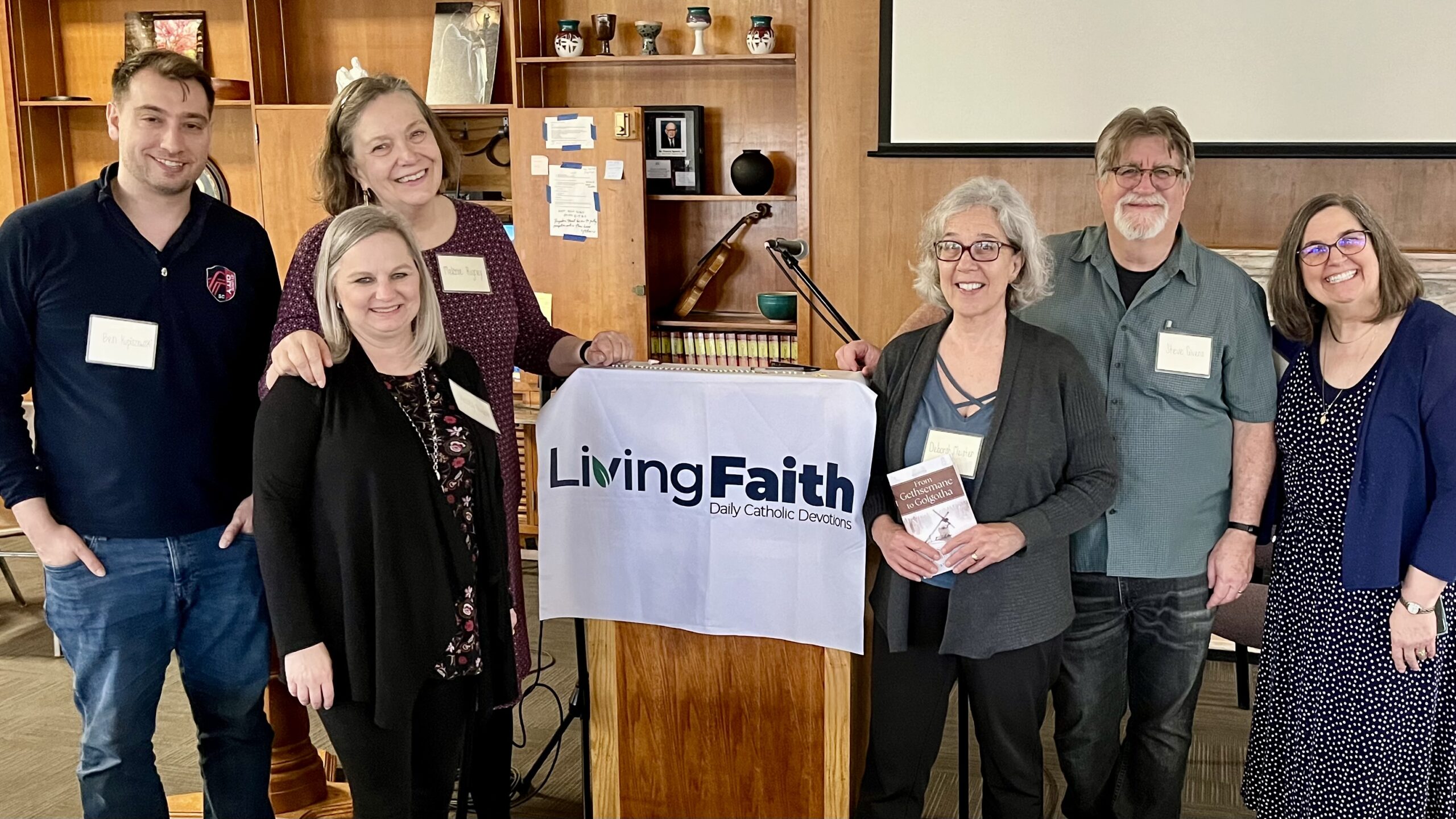
From left, editorial assistant Ben Kupiszewski, assistant editor Kasey Nugent, writer Melanie Rigney, writer Deb Meister, me, and editorial director Pat Gohn.

We are not called to just sit in our lives of faith but, instead, we must have the courage to stand and walk in it. We are not called to be solo Christians, singular people of faith concerned only with keeping to silence and hours of prayer. We are called to be more than enlightened individuals. We are created to be light in our communities, to be in service to one another. We are called to be in communion with God, but we are also called to be in communion with others. This is what makes us church.

God calls us, instead, to lives of action and interaction, to lives that allow others to see an inmost calm at work in us and wonder where they might find such peace for themselves.

One of my all-time favorite movies is Field of Dreams. We all know the most famous line from that film, right? Right at the beginning, Ray is walking through the corn and he hears a voice say: “If you build it, he will come.” (see the clip by going to my blog)

One of my favorite pieces of dialogue comes right after that first scene, when Ray goes inside to have dinner with his wife, Annie, and his daughter, Karin. His wife asks him what the voice said and he replies:

If you build it, he will come.
She replies: If you build what, who will come?
He says: He didn’t say.
And she says, “I hate it when that happens.” 

I have come to see this as a model of prayer. We put ourselves somewhere where we can be quiet enough to listen. Like that cornfield that Ray created as a place of encounter with Shoeless Joe Jackson, a bunch of long-dead ballplayers and, eventually, his own father. In the beginning, he is digging around in the dirt and he stops and listens because he THINKS he heard something.

What if God is asking us to build something? What if God is asking for your help to rebuild his Church? How do we answer the question: If we build what, who will come? What is God asking us to build? In our lives of prayer, just like in the movie, sometimes this voice is not very clear or overly instructive. But this, in fact, is the work of our lives, and we don’t do it alone. We get to do it together. This is what it means to be Church. This is what we live for. This is what God is building in us.

God is building the perfect us in us, the perfect church in us, if we will only let him.

Remembering Our Belovedness

Steve · March 19, 2025 · Leave a Comment

Lent is a solemn time. We are called to fast, pray, and give to others our time, talent and treasure. We are asked to walk beside Jesus as he makes his way toward the cross. It’s a time of remembering what’s often called our “salvation history,” the story of God’s plan to save humanity from sin and death, unfolding through key events and figures in the Bible, and culminating in the life, death, and resurrection of Jesus Christ. It’s a time of repentance and reconciliation with God and others. Serious stuff.

When I lead individuals through a nine-month experience of the Spiritual Exercises of St. Ignatius Loyola and we enter into what is called the “third week,” it always intersects with the season of lent. I remind them that this time is different. It’s time for their prayer to become more intimate and quieter and for the lights to become a bit dimmer. It’s time to light a candle to help focus our minds and hearts on the seriousness of our relationship with Christ and what that means for our souls.

But all that is not to say this is a time to be glum and mournful. As we fast and pray, Jesus reminds us in Matthew 6 to “wash our faces and comb our hair” so that our fasting isn’t obvious to everyone around us but only to God who sees the extra effort we’re making. Lent is, on one hand, a time to remember the “darker side” of the Christian story and reform ourselves because of it. But the core of that story, we need to remember, is more than Jesus’ painful death on the cross. We’re not asked to merely remember the pain. We’re called to see the love hanging there.

At the heart of the story is a relationship based on love and our belovedness by God. No other approach, no other “bottom line” is sufficient to tell the story of Jesus and the cross. At the far end of Lent, Easter awaits. To get there, the only path is love. Whatever we feel about ourselves and our lives, whatever burdens we carry, whatever weaknesses and sins weigh heavy, Lent is a time to remember God’s love for us.

Today I want to share with you singer-songwriter Sarah Kroger’s lovely song, “Belovedness,” a gentle and powerful reminder of this most important truth of our relationship with God. It contains these lines:

You’ve owned your fear and all your self-loathing.
You’ve owned the voices inside of your head.
You’ve owned the shame and reproach of your failure.
It’s time to own your belovedness.

You’ve owned your past and how it’s defined you.
You’ve owned everything everybody else says.
It’s time to hear what your Father has spoken.
It’s time to own your belovedness.

He says, “You’re mine, I smiled when I made you.
I find you beautiful in every way.
My love for you is fierce and unending.
I’ll come to find you, whatever it takes,
My beloved.”

  • Page 1
  • Page 2
  • Page 3
  • Interim pages omitted …
  • Page 20
  • Go to Next Page »

Primary Sidebar

Subscribe to Our Newsletter

Check your inbox or spam folder to confirm your subscription.

Categories

  • A (Very) Short Story
  • Being There
  • Blessings
  • Book Reviews
  • Chemotherapy
  • Christmas
  • Creative Spirit
  • Creativity
  • Games We Played
  • Guest Bloggers
  • History
  • House concerts
  • Ignatian Spirituality
  • Leadership
  • Music
  • My Soundtrack
  • Nature
  • Notes from a Lecture
  • Photography
  • Poetry
  • Prayer
  • Scripture
  • Songwriters
  • Spirituality
  • Sports and Culture
  • Stem Cell Transplant
  • STLToday Faith Perspectives
  • Today's Word
  • Travel
  • Two Minutes
  • Uncategorized
  • Vocation & Call

Recent Comments

  • Steve on All Signs Point to the House of God
  • Steve on We are the Leftover Fragments
  • Chris on We are the Leftover Fragments
  • Pat Butterworth on All Signs Point to the House of God
  • Steve on Wonder as the Foundation of Prayer

About the Author

Steve Givens is a retreat and spiritual director and a widely published writer on issues of faith and spirituality. He is also a musician, composer and singer who lives in St. Louis, Mo., with his wife, Sue. They have two grown and married children and five grandchildren.

Read More >>>

Recent Posts

  • For Just One Night – Hope and Peace
  • Let’s Go Around the Table (in Detail)
  • All Signs Point to the House of God
  • Wonder as the Foundation of Prayer
  • We are the Leftover Fragments

Recent Posts

  • For Just One Night – Hope and Peace
  • Let’s Go Around the Table (in Detail)
  • All Signs Point to the House of God
  • Wonder as the Foundation of Prayer
  • We are the Leftover Fragments
  • Home
  • About
  • Blog
  • Spiritual Direction
  • Publications
  • CCG Music
  • Contact

Reach out to connect with Steve Send an E-mail

Copyright © 2026 · Built by Jon Givens · Log in