• Skip to primary navigation
  • Skip to main content
  • Skip to primary sidebar

Givens Creative

Life at the intersection of faith, nature, history and art

  • Home
  • About
  • Blog
  • Spiritual Direction
  • Publications
  • CCG Music
  • Contact
  • Show Search
Hide Search

Chemotherapy

Second Week of Lent: Seeking Forgiveness and Saying What Needs to be Said

Steve · March 6, 2010 · 1 Comment

Mitch Albom's "Have a Little Faith"

I have just finished reading Mitch Albom’s (Tuesdays with Morrie) new book, a beautiful story of two men of God called “Have a Little Faith.” The two men are Albom’s own rabbi, who has asked the author to give the eulogy at his funeral, and an ex-convict-turned-Christian minister who works with the poorest of the poor in Albom’s adopted home of Detroit. It’s a great little book of faith, relationship and commitment, and a portion of the proceeds of the book benefits Albom’s own “Hole in the Roof Foundation,” which helps refurbish places of worship that aid the homeless. Good read, read cause.

As I eased further into Lent this past week, I was particularly taken by a story from the rabbi (The Reb) on the importance of seeking forgiveness and never waiting too long to say what needs to be said. The Reb tells Albom the story of a man standing by his wife’s newly dug grave, tears streaming down his face:

[Read more…] about Second Week of Lent: Seeking Forgiveness and Saying What Needs to be Said

My Soundtrack: Seize the Day

Steve · January 11, 2010 · 2 Comments

[an occasional series of essays about life, spirit, and the music that makes up the soundtrack of my life]

The Power of a Song, photo by Steve Givens, Nicaragua, 2009.

Seize the day, seize whatever you can
‘Cause life slips away just like hourglass sand.
Seize the day, pray for grace from God’s hand.
Then nothing will stand in your way…seize the day.

–singer-songwriter Carolyn Arends

The Latin phrase carpe diem, perhaps made most famous during modern times in the movie “Dead Poet’s Society,” has been around much longer, dating back to a poem by Horace (65 BC – 8 BC).  It is usually expressed in English as “seize the day,” although its literal translation is perhaps closer to “pluck the day” or “pick the day,” as in gathering flowers.  A nice image.

Some choose “carpe diem” as a life philosophy and live the proverbial “eat, drink and be merry for tomorrow we die,” which indeed appears to perhaps be Horace’s original meaning. In the name of this carpe diem some get in touch with the darkest part of themselves, engaging in often self-destructive behavior.  But there’s more to carpe diem than this. There’s more than one way to seize the day.

Take, for example, the characters who reside within Carolyn Arends‘ song, “Seize the Day,” who live their lives by seizing all that God is offering them. They live day to day by seizing the opportunities to do creative and charitable things. One person writes poems and novels; one works in an African clinic and “writes home to the cynics”; another is an older man, an alcoholic, who laments that he never learned what it truly means to seize day and now fears that it’s too late. Finally, there is Arends herself, who triumphantly announces that, throughout her travels as a performer, she has noticed: “Everyone’s got a dream they can follow or squander/You can do what you will with the days you are given/I’m trying to spend mine on the business of living.”

About a year after being diagnosed with my rare blood disease, I was given the opportunity to accompany my church’s youth group on a service trip to Nicaragua through an organization called “Amigos for Christ” that helps builds houses and entire communities for the poor of one of Latin America’s poorest countries. I knew we were only going for a week and I knew we wouldn’t change the world much for the people of the villages where we worked in the northern part of the country. But what I didn’t know was that – working in the shadow of mountains and volcanoes that loom so large over these villages — I would learn so clearly about the courage and fortitude of a community of people who have been dealt a pretty raw deal in life. I learned that they cared about many of the same things that any of us care about and that, when it comes right down to it, we all need food, warmth, friends and a place to call home.

I also learned that I was no longer strong enough to carry a 90-pound bag of cement very far and that I didn’t have the same amount of energy for digging ditches and lugging buckets of concrete and gravel that others had. I learned that there are wonderful young people who gladly stepped forward to take my spot on some of the tougher chores and that a ten-year-old boy from the village could shovel and carry faster than I could.

I learned that I could play with a young orphaned boy with cerebral palsy and get absolutely nothing – not even a smile – in return. I learned that I could read Spanish well enough to entertain a group of kids, even if part of the entertainment, I figured out, was them laughing at my poor Spanish skills. I learned that we could play games without having to have a winner and that people have immense pride in a home that they helped build, even if that home was smaller and simpler than my garage.

So I may not have changed their world in a meaningful way, but I know that together we made a difference and I know I changed my own life and way of thinking about the world. I know the village is just that much closer to having a new school because 40 of us worked for a week lifting and pouring and carrying. I know I made a difference because some kids in a small village in Nicaragua now believe there are people in the United States who know about them and can call them by name. I know I made a difference because I dared to take a risk and change my own world by moving outside my comfort zone.

In the end, it doesn’t matter what we do, how much we give or how far we travel to do it. What matters is that we give of ourselves whether we’re a healthy and strong 20-year-old or a 50-year-old with a rare blood disease who receives chemotherapy every three weeks.

I may be able to go back next year or I may not. That doesn’t matter. I’ve learned to seize the day like a child who picks a flower for no other reason than its beauty. We can change the world. We can help a child. We can help build a village or raise our own kids and teach them well. We can write a song or a poem or a novel.  We can fight our demons, our fears and our addictions. And there’s no reason to wait. As Anne Frank once wrote, “How wonderful it is that nobody need wait a single moment before starting to improve the world.”

Don’t wait a single moment. Find your place. Focus on your strengths instead of your weaknesses. Do what you can instead of wallowing in what you cannot. Respond to the call to serve. Seize the day.

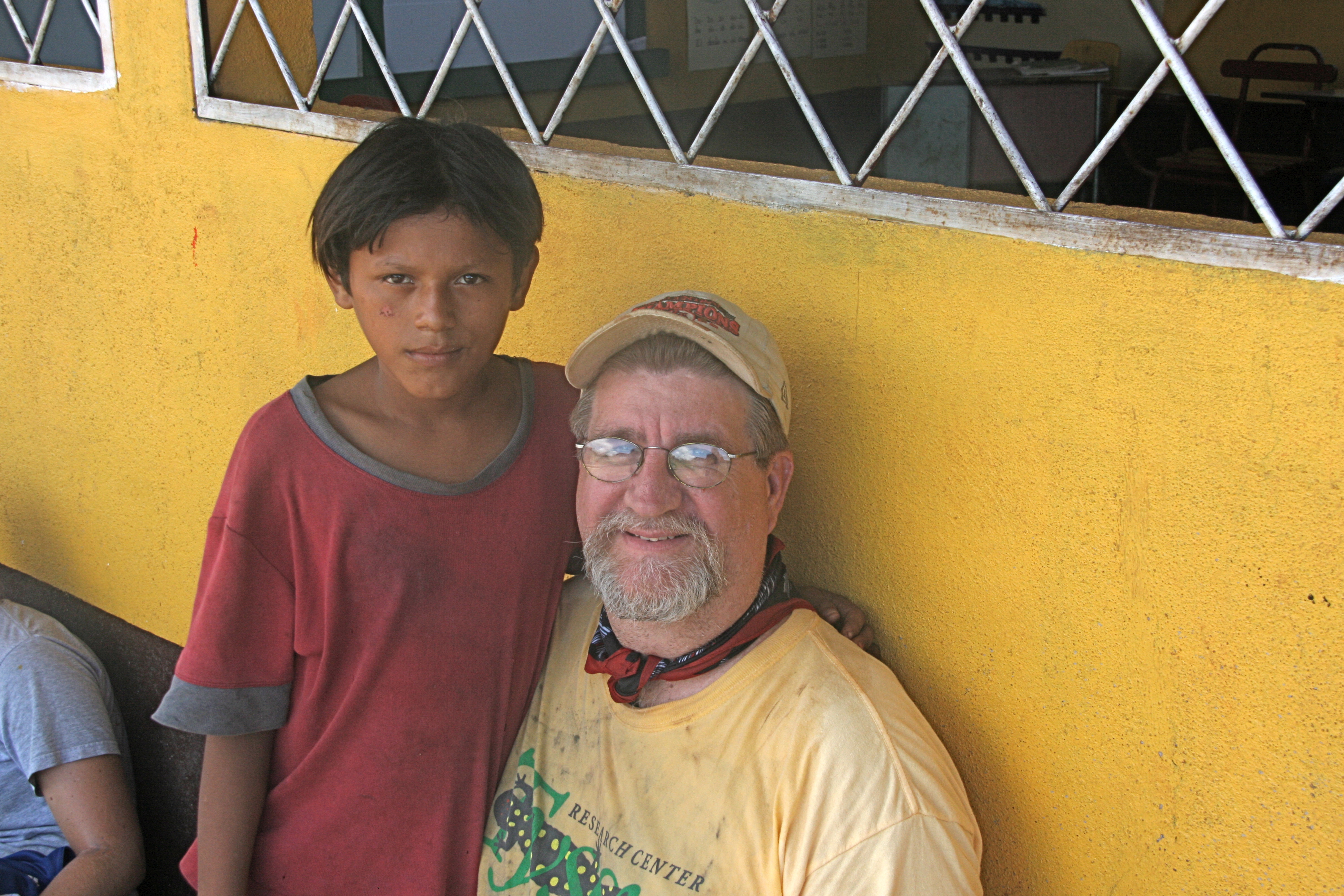
Me and mi amigo, Nicaragua, 2009.

Taking on the Black Hill of Death

Steve · December 19, 2009 · 2 Comments

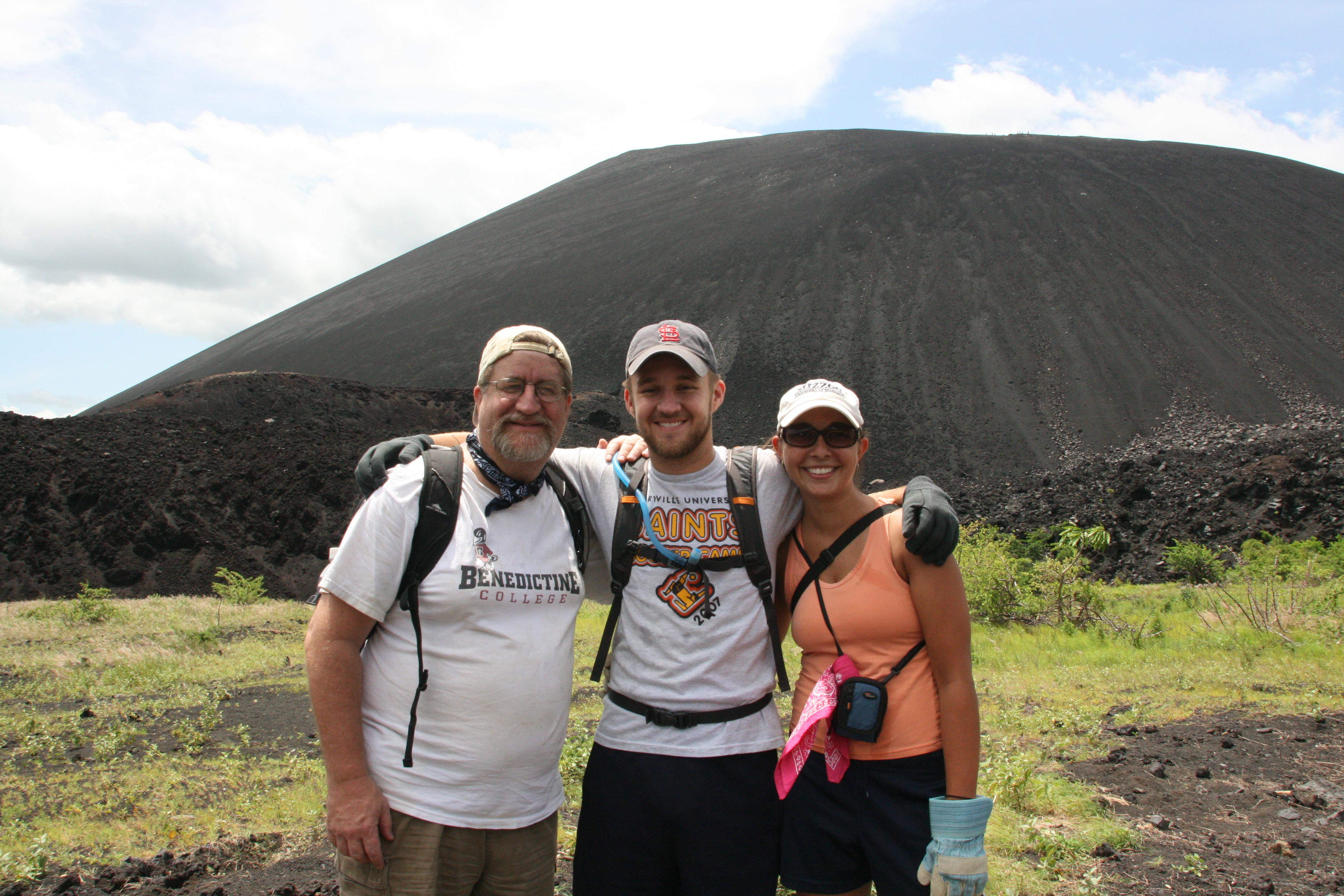
Me, Jon and Jess, at the foot of Cerro Negro before the climb.

This past summer, I accompanied my parish youth group on a one-week mission trip to Nicaragua, where we helped build homes and a school near the northern city of Chinendega. But first, we were told that we were going to climb Cerro Negro, a 2,400-foot high volcano that had last erupted about a decade ago. When we arrived at the site, dubbed (jokingly, I hoped) the “black hill of death,” I stood in awe of the giant black formation. I wondered, and even doubted, if I could climb to the top along a narrow path among the jagged rocks and boulders and then make my way down the smooth slope of the other side of the hill that was covered with foot-deep volcanic gravel. I knew, of course, that I had an easy out. I could say that I just didn’t feel up to it and no one would question me. But I decided to go for it.

I thought it might be tough, but I wasn’t ready for just how tough it was. I stopped often along the way to catch my breath and gather the strength and will to go on. When I reached the top of the first winding and difficult path that led to another narrow path that shot straight along the crest of the volcano, my heart fell when I realized how much I had left to do. But I put one foot in front of the other, I put my head down and just walked, and with time I found myself standing at the highest point of the volcano.

My good buddy, Larry, takes a break on the way up Cerro Negro. Photo by Steve Givens

The pay off was great. The views were spectacular, and I got to share the accomplishment with the others in the group, including my son, Jon, and his girlfriend, Jess. We cheered on those who were still making their way up. We shared stories of the ascent and a simple meal of peanut butter and jelly sandwiches. We took photos of each other rejoicing at our accomplishment. And then we headed down – a joyous descent, sliding and jumping through the loose volcanic gravel in minutes and making the multi-hour ascent a mere memory.

I learned a lot about myself that day. I learned I could do more than I thought I could. I learned the power of “one step at a time” and I remembered my high school coaches’ encouragement to get past a little bit of hurt by “walking it off.” But for me, this day was about much more than walking or physical strength.

I rediscovered an inner strength that I know comes from God. I reconnected with the idea that we are called to take care of our bodies because they are the temples of the Holy Spirit. I’m not going to become a marathon runner any time soon, but my experience on Cerro Negro, along with the intense physical labor of the rest of the week, awakened in me a need to both push myself a little physically (as my body with its disease will allow, of course) and, more importantly, to learn to call upon God as the source of my strength.

Me and Jon at the top of Cerro Negro

So when I just can’t do it, or when I am winded or fall, the greatest blessing is knowing that I have a God who sees me in my weakness, who knows me by name, and who picks me up and carries me the rest of the way. I am not ashamed of my weakness, for it is just an outward sign that there is still healing to be done inside me.

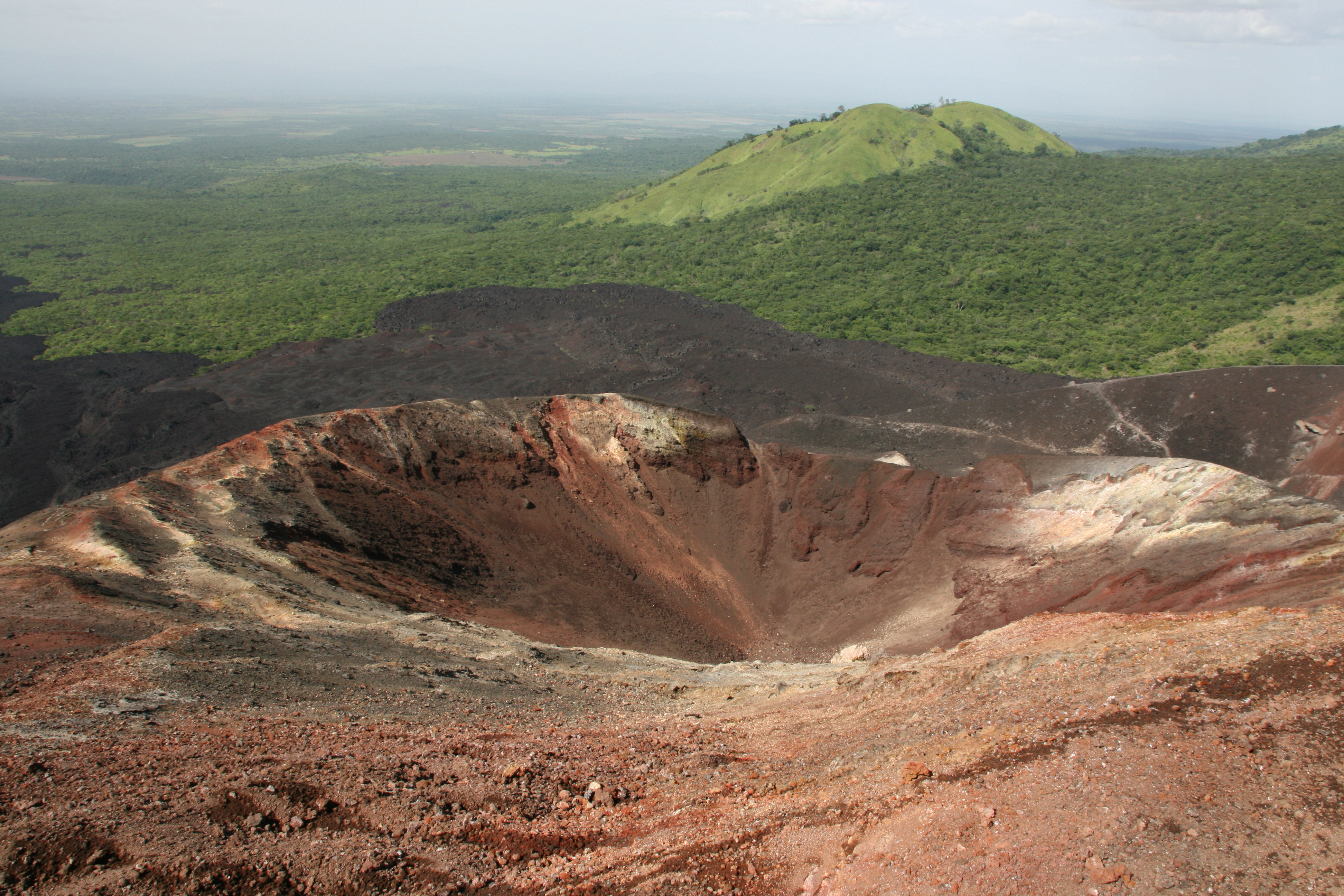
Looking "into" Cerro Negro.

Finding the Sacred in the Ordinary

Steve · December 6, 2009 · 2 Comments

[an excerpt from a work in progress: “Embraced by God: Facing Chemotherapy with Faith.]

Holy is the dish and drain, the soap and sink, and the cup and plate,
and the warm wool socks, and the cold white tile, showerheads and good dry towels, and frying eggs sound like psalms, with bits of salt measured in my palm. It’s all a part of a sacrament as holy as a day is spent.

–    Carrie Newcomer

I was driving to work one day last week and, when I was almost to my office, I realized that I didn’t remember a thing about the drive. I remembered backing out of my driveway and turning onto the main road that would lead me toward the university, but that’s all I remembered. I had been so lost in thought and in the business and busy-ness of my day that I failed to notice anything along the way. No stoplights, no trees, no people, no cars around me. How I arrived safely I’ll never know. It was like I was on autopilot. And that experience of mindless driving, I thought, is exactly how I so often find myself plunging ahead through life, unaware that all around are signs and moments of God’s presence and grace.

The sacred in an ordinary lollypop. Chinendega, Nicaragua, 2009. Photo by Steve Givens.

It’s relatively easy to recognize the things in our lives that we have come to know as holy or sacred. If asked to list these elements of life, many of us would quickly rattle off words like church, scripture, God, mass and sacraments. We might even branch out further from these distinctly religious ideas and objects and include words like family, children, grandchildren and friends. We might even recall those special moments in our lives when God seemed especially close – perhaps standing on the rim of the Grand Canyon, listening to a favorite piece of music or observing a work of art. We might think of holy days and holidays. We might recall weddings and births and even deaths. Certainly all these experiences can be seen as sacred to us.
But there is also sacredness in the seemingly ordinary moments of my life that, like my drive to work, all too often passes by in a noisy blur without much notice. These moments can be fleeting and seemingly meaningless, but when we take the time to reflect and allow ourselves to live a more examined inner life, we can begin to see that the sacred is all around us.

Departure: The sacred in a moment of sadness. Chinendega, Nicaragua, 2009. Photo by Steve Givens

Don’t get me wrong. I don’t live in a constant state of spiritual bliss, always aware that God is in the room with me and that everything I do is part of a grand sacrament of ordinary life. Indeed, a week or a month can go by when I don’t feel this (or remember to sense it) at all. But I do believe we are all called to this way of living, and we are perhaps especially called to it if we find ourselves facing serious disease and health issues. For when we allow ourselves and our lives to be drawn into the realm of the sacred and the divine, then even our pain can take on a semblance of the sacred and our days of chemotherapy can transform into sacramental moments of sacrifice, prayer, worship and even grace.

  • « Go to Previous Page
  • Page 1
  • Page 2
  • Page 3

Primary Sidebar

Subscribe to Our Newsletter

Check your inbox or spam folder to confirm your subscription.

Categories

  • A (Very) Short Story
  • Being There
  • Blessings
  • Book Reviews
  • Chemotherapy
  • Christmas
  • Creative Spirit
  • Creativity
  • Games We Played
  • Guest Bloggers
  • History
  • House concerts
  • Ignatian Spirituality
  • Leadership
  • Music
  • My Soundtrack
  • Nature
  • Notes from a Lecture
  • Photography
  • Poetry
  • Prayer
  • Scripture
  • Songwriters
  • Spirituality
  • Sports and Culture
  • Stem Cell Transplant
  • STLToday Faith Perspectives
  • Today's Word
  • Travel
  • Two Minutes
  • Uncategorized
  • Vocation & Call

Recent Comments

  • Steve on All Signs Point to the House of God
  • Steve on We are the Leftover Fragments
  • Chris on We are the Leftover Fragments
  • Pat Butterworth on All Signs Point to the House of God
  • Steve on Wonder as the Foundation of Prayer

About the Author

Steve Givens is a retreat and spiritual director and a widely published writer on issues of faith and spirituality. He is also a musician, composer and singer who lives in St. Louis, Mo., with his wife, Sue. They have two grown and married children and five grandchildren.

Read More >>>

Recent Posts

  • All Signs Point to the House of God
  • Wonder as the Foundation of Prayer
  • We are the Leftover Fragments
  • Does Faith Leave Us Open to Change?
  • Discovering Fire (Again): The Innovation of Love

Recent Posts

  • All Signs Point to the House of God
  • Wonder as the Foundation of Prayer
  • We are the Leftover Fragments
  • Does Faith Leave Us Open to Change?
  • Discovering Fire (Again): The Innovation of Love
  • Home
  • About
  • Blog
  • Spiritual Direction
  • Publications
  • CCG Music
  • Contact

Reach out to connect with Steve Send an E-mail

Copyright © 2025 · Built by Jon Givens · Log in