• Skip to primary navigation
  • Skip to main content
  • Skip to primary sidebar

Givens Creative

Life at the intersection of faith, nature, history and art

  • Home
  • About
  • Blog
  • Spiritual Direction
  • Publications
  • CCG Music
  • Contact
  • Show Search
Hide Search

Scripture

Leadership: Standing Still and Stepping Out

Steve · August 9, 2020 · 12 Comments

Artwork by Steve Tadrick.

(First in a series of posts about being the kind of servant-leaders the world needs.)

Generally speaking, Sue and I enjoy sleeping through a good thunderstorm, but last night Mother Nature put on a display of thunder, lightning, driving wind and incessant downpour that made us jump out of bed a few times just to make sure the world hadn’t come to an end and our house wasn’t floating away.

Luckily, the morning brought some cool and calm, and we spent a good chunk of the morning on the back porch watching the gold and house finches, chickadees and hummingbirds visit our feeders out in their storm-soaked world. They seem no worse for the wear. The squirrels go on as ever, and that’s a story for another time. Someday soon, I intend to write an insightful essay about how to love the pesky “squirrels” in our lives. But as they just recently destroyed another birdfeeder, that time is not yet.

As always, there seems to be a lesson to be learned from the two great works of “scripture” in our lives — nature and the written word of God. Today, both are speaking to me of resilience and of the necessity of finding pieces and places of quiet and solitude in order to be effective leaders — at home, at work, in our churches and other organizations.

Today’s readings (for the 19th Sunday in Ordinary Time, for those of you who follow the liturgical cycle) give us two stories that resonate with the storm that was thrown at us last night. With last night’s tempest still lingering in the air and in my memory, we get stories from both the Old and New Testaments about finding God in the storm. The lessons are clear, especially for leaders who frequently find themselves trying to navigate themselves and others through the most recent cloudburst. (I almost wrote “unexpected cloudburst” but that would be poor leadership indeed, huh? For the storms, however far apart, will always return.)

In the first reading (1 Kings 19:9-13), we are reminded that sometimes being a leader requires us to channel our inner Elijah, standing at the mouth of a cave (at the front of our organizations?) amid strong winds, crushing rocks and consuming fire and still having the faith and the wherewithal to seek the quiet whisper of God’s voice that says, “Here I am, never mind the storm.” If we’re going to lead others effectively through rough times, we need to put ourselves in the right place to hear that voice. That “place” is a regular return to prayer — to quiet, to solitude, to “silence,” even when the world and those in it seem intent on screaming in our general direction.

In today’s gospel reading from Matthew 14, we read the well-known story of Jesus walking on the water to comfort his friends, stranded as they are in a storm-rocked boat in the Sea of Galilee. Jesus, compassionate leader and teacher that he is, leaves his needed place of quiet and solitude and prayer (see above!) and sets out to help his friends, walking on the waves to prove his point and get their attention. For the floundering, fearful, faltering followers (and future leaders) in the boat (that’s us, too) the lesson is obvious: When we’re getting hit hardest, when we are most confused about what to do, we need to look beyond our abilities to navigate a storm by ourselves. We need to watch for Jesus walking and working in the most unlikely of places — perhaps where we seem least likely to find him even though we ought to know better by now. Like Peter, we need just enough faith to step out of the boat and into the storm instead of cowering in the bow and waiting for it all to pass.

We seek God in quiet. We are nourished and calmed by that presence. But we also must be prepared to wade into the depths and find a hand waiting for us. Alone, it can all seem too much to bear. With that hand in ours, it’s still not a walk in the park on a sunny day. Storms always return. But that hand is enough. We never lead alone.

Content being branches, bearing fruit

Steve · June 1, 2020 · 10 Comments

Last week, on my drive home from a long walk at a nearby county park, I noticed a sign at a local farm announcing that strawberries were ripe and ready for sale. I had been watching and waiting and hoping for this sign. I pulled onto the gravel road, drove the short distance between the fields from highway to shed, and parked the car.

I donned my mask as we all must do these days, but I think the woman behind the till could still see the smile on my face as I picked out a few cartons and paid. “I’ve been waiting for this,” I told her.

Back in the car, I set the strawberries on the seat next to me, already googling a recipe for shortcake and planning a nice surprise for our evening meal. But before I put the car in reverse and left the farm, I reached over and grabbed a plump red berry and bit into it. Still warm from the sun, it melted in my mouth and I couldn’t help but think about the goodness of God’s brown and green earth. I offered a prayer of gratitude for sun and earth and farmer and field.

Even in the midst of pandemic and racial injustice and unrest, even when we are confused and not sure what comes next, we have a gentle reminder from John’s gospel that sometimes the very best thing we can do is to hold tight to the one who created us: “I am the vine and you are the branches. Whoever remains in me and I in him will bear much fruit.” (John 15:5)

Over the next few days I was drawn back to that scripture passage and to others that still speak to us of this unique relationship we have (mere branches to the vine of God’s presence) and the responsibility we have because of that position in God’s great plan. For if we’re going to claim a place on God’s vine, we have the duty to bear fruit that will draw others to God. We have an obligation to be the kind of fruit that brings broad smiles to others (even behind their masks) and makes them wonder what kind of master farmer produces such goodness.

I continued to pray with these images, sitting in silence, enjoying again and again the strawberries from that farmer’s field, and finding in those times of delicious contemplation a few words that helped me, once again, through a rough patch. For what I found (or remembered) is that sometimes the very best we can do is be content with being branches that bear fruit, attached to the vine until that very last moment when someone picks us off because we have become the very thing they need.

A Week of Psalms

Steve · May 23, 2020 · 6 Comments

On a recent pandemic walk.

A few weeks ago, I posted each day on my Facebook page a short poem and photograph inspired by one of the Psalms. [I didn’t post here because I didn’t want to inundate your inbox each day!]

The Psalms, as Fr. Michael Joncas noted in an interview I posted about a month ago, can be doorways to our emotions and deepest held fears and joys. They are “salves,” he noted, precisely because there is nothing new under the sun. The words of the ancient psalmist hit us in our guts — right where we live and breathe — because even though the world has changed immensely, we are still the same as the joyful, lost, questioning, mourning souls who wandered the earth two thousand years ago. The more things change, the more they remain the same.

We try to make sense of what’s going on in our world by singing and crying and shouting and whispering prayers and songs to the One who created us and listens to us still. The Psalms help us do that.

So here are my little offerings…my takes on individual Psalms as they are speaking to me right now during this time of pandemic and change. Read one a day or read them all right now. Most importantly, open your Bible and spend time with your own favorite Psalms that comfort or speak your heart.

Being There: Who Do You Say I Am?

Steve · May 11, 2020 · 3 Comments

In today’s reflection, based on Mark 8, I ask you to imagine yourself one of Jesus’ new followers. You’re not sure about him yet, not sure what it is you’re supposed to believe and feel. But your eyes are wide with wonder and your heart is open. Pray with this reflection, maybe read it a couple of times, and then ask yourself the question that Jesus asks his followers: Who do you say I am?

If you’d like, and if it will aid you in prayer, you can listen to this recording I made reading the reflection: Mark 8 — Who Do You Say I am?

Written and narrated by Steve Givens
Music composed and performed by Phil Cooper

You are not what anyone would call a disciple of this man yet, but here you are trailing along behind him and his followers, listening to his stories and staring open-mouthed and astounded as the most unusual and unbelievable things happen. You don’t know what to believe for sure, but there’s something going on here that is beyond anything you have ever experienced before. Something about him that urges you to follow just to see what happens next. If nothing else, he’s one heck of a teacher and magician. So you guess you’re a follower in that sense. You’re the quiet one at the back of the pack.

Just ahead, you hear his disciples bickering. Evidently, no one remembered to bring any bread to eat and there seems to be some confusion about whose responsibility that was. The teacher turns around and looks at them, disappointment on his face, as if he is dealing with a group of unruly children.

“Why are you worried about bread?” he says to them. “Don’t you know we’re about bigger things here? Don’t you get it? Have you forgotten a few days ago when I took five loaves of bread and fed 5,000 people? Do you not remember the baskets and baskets of leftovers?”

They stand looking at him with sorry, embarrassed eyes.

You remember, you think to yourself. That was your first day with him. Seven baskets of leftovers. That was some trick.

“We didn’t forget,” one of them says, “But we didn’t want to bother you again…”

“We don’t expect miracles every day,” says another, laughing.

“It’s not about the bread,” he responds, his eyes soft now with compassion. “It’s about the trust. Trust me. Every day is a miracle.”

You arrive at Bethsaida. As you have seen happen in just about every town he enters, he is quickly surrounded by people wanting something from him. They want a story. They want to see a miracle. They want to be healed or see him heal. They want proof. As do you. This never gets old, you think.

Up through the crowd comes a trio of people pulling behind them a blind man on a rope. He stumbles behind them, his arms stretched out in front of himself, grasping at air and preparing for any abrupt stop. “Please, heal our friend,” they say.

Jesus turns and looks at the man, compassion and love on his face. First, he unties the rope and takes him by the hand, leading him back out of the village and away from the noise and crowds.

Then he does the most remarkable thing. He spits in his own hands and then gently rubs the spittle into the man’s eyes. He embraces the man’s head, cradling it like a treasure. You inch closer, longing to hear what is being said. Jesus asks the man: “Do you see anything?”

The man looks up and his once-sightless face glows red-orange in the late afternoon soon. “I see men,” he says, looking around at you and the disciples, smiling and trying to find the right words for something he has never seen before but only imagined. “They look like walking trees.”

Jesus smiles at his words and stretches out his arms once again. “I can make it perfect,” he says, once again taking the man’s face into his hands. The man clings to Jesus, as if he doesn’t ever want the embrace to end, afraid that his lack of faith might push him back into darkness.

“Go straight home and show yourself to your family,” Jesus says. “See them perfectly.”

The man backs away from Jesus and the look on his face tells you all you need to know. He sees you. He sees you looking at him. “How can this be?” he whispers to you, and you have no response worthy of what you have just experienced.

You are on the move again, walking in the wilderness and headed out for the villages around Caesarea Philippi. As you and the others pause and gather around him, Jesus asks: “Who do the people say I am?”

One of his disciples answers, “Some are confused and say you are ‘John the Baptizer. Some say Elijah. Others say you are one of the prophets.”

“And you,” he says, looking straight at you, the quiet one at the back of the pack. Who do you say I am?”

Songs of Comfort: On Eagle’s Wings

Steve · April 22, 2020 · 8 Comments

Note: I interviewed Fr. Jan Michael Joncas a few weeks ago about the enduring power and comfort of his song, “On Eagle’s Wings” for Catholic Digest magazine, which went out of print not long after the assignment. So with Fr. Joncas’ permission, I am posting the article here.

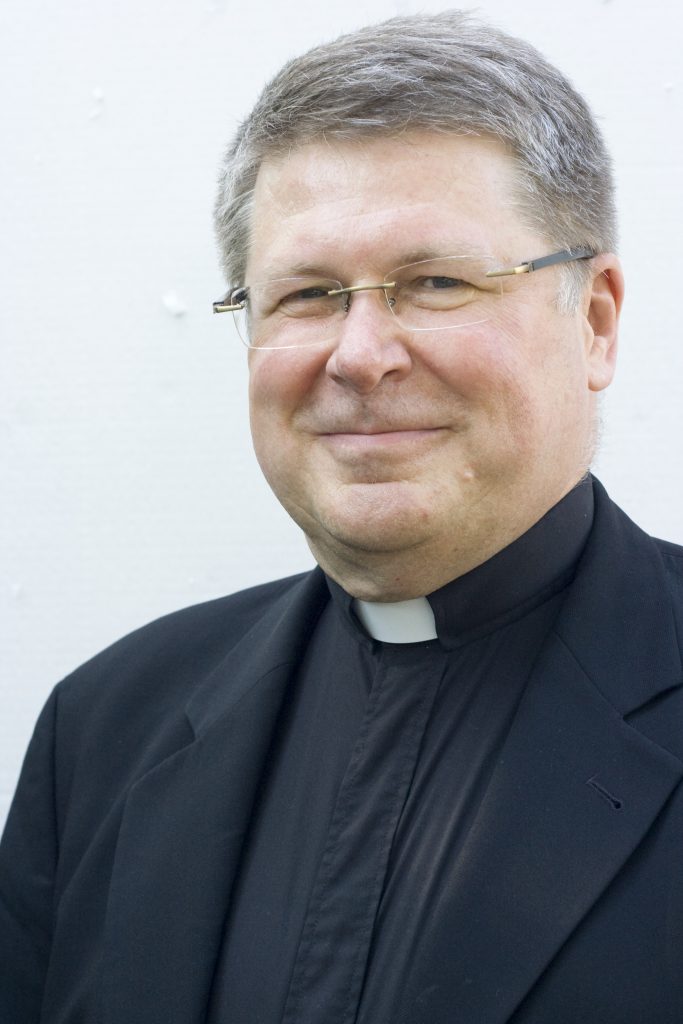
Fr. Jan Michael Joncas, courtesty photo.

When Fr. Jan Michael Joncas composed the song “On Eagle’s Wings” four decades ago, he was trying to comfort a friend whose father had just died of a heart attack. He wrote the song on guitar in the days following the death and then performed it at the funeral, and that might have been the end of the story. But God, Fr. Joncas said in a recent interview, had other plans.

“It’s just amazing to me,” said Joncas, 68, a prolific composer, priest of the Archdiocese of St. Paul and Minneapolis, and artist-in-residence and research fellow in Catholic Studies at St. Thomas University. “I had no way of knowing, first of all, how it got distributed so that people could use it. But by now, it’s made its way across most of the English-speaking world and into other denominational hymnals.”

Even higher-profile uses of the song include recordings by superstars like Josh Groban and Michael Crawford, as well as its performance at the memorial service for the 1995 Oklahoma City bombing victims and at the funeral of opera singer Luciano Pavarotti.


“I never expected anything like this to happen,” said Fr. Joncas, quarantined at home in St. Paul, “but as I’ve grown older, I’ve grown more and more comfortable with it. I tell my friends that to even have written one piece that has allowed this many people to sing their faith is an incredible gift. Even if nothing else I’ve written ever has that same kind of distribution or power, I’m still happy with it. God does what God wants with this stuff. I am just more and more amazed at how God can use things that you might not ever have thought of to advance whatever God’s intentions are.”

And although it’s become one of a handful of contemporary hymns that have become staples at funerals, Fr. Joncas believes its scriptural roots in Psalm 91, as well as in Exodus and the Gospel of Matthew, make it a song of comfort for the many confusing and fearful times of our lives, as well as for ordinary and joyful times like baptisms and weddings.

“I’m going to use my academic background here,” he said, laughing quietly. “It’s the multivalence [ability to have many values and meanings] of any kind of canonical text scriptures that give them really different importance or different meanings based on the context in which they are used. So the context for ‘Eagle’s Wings’ has been in most people’s experience of funerals, but it’s not limited to that.”

The fact that the song can often make people cry – not because it’s sad but because it’s so comforting — is a gift of the Spirit, said Fr. Joncas, who in 2003 was diagnosed with Guillain-Barré Syndrome, a disorder in which the body’s immune system attacks the nervous system. He was paralyzed for several years and unable to compose. He wrote about his experiences of the disease in “On Eagle’s Wings: A Journey Through Illness Toward Healing,” released in 2017 by Twenty-Third Publications. It was that experience, he says, that allowed him to move beyond his Midwestern stoicism.

“The Eastern traditions talk about the gift of tears, which I think is really accurate,” he said. “I’m a now-beyond-middle-aged, Caucasian Midwesterner, which means that expressions of deep emotion just don’t come to me naturally. After my experience with Guillain-Barré, I found that I’m much more able to trust the feelings, to let them come out, and to connect empathically with people.”

It is, perhaps, the song’s central and vivid image of being “held in the palm of his hand” that gets us every time. It’s a physical impossibility, but it’s the emotional driver of the song. And that’s the power of scripture, Fr. Joncas says.

“One of the things I teach is that psalms are the cries of the human heart, that even though these are ancient Jewish lyrics, they have this wonderful ability to enter very deeply into human experience and then allow that experience to become a way of encountering God.”

At this moment in time, when the world is wracked by disease and the fear of the unknown, Fr. Joncas suggests that leaning on ancient texts like the Psalms can be a healing salve precisely because there’s nothing new under the sun.

“Although this [pandemic] is certainly unprecedented in our memory, there are people who can point to the Spanish influenza right at the beginning of the 20th century. As a historian, I can say, ‘well, it’s not the black death where a third of Europe simply disappeared over the course of a couple of years.’ We’ve faced this kind of difficulty before. But I think the scary part is we’ve got so much good science and technology that we thought we’d be protected from anything like this. So it really pulls the rug out from underneath our expectations.

“When that happens, I think going back to texts from our heritage is important, and songs of comfort remind us of a time when we have already experienced God’s care, and it’s kind of an act of trust that God will continue to care for us.”

In the palm of his hand.


  • « Go to Previous Page
  • Page 1
  • Interim pages omitted …
  • Page 5
  • Page 6
  • Page 7
  • Page 8
  • Page 9
  • Interim pages omitted …
  • Page 14
  • Go to Next Page »

Primary Sidebar

Subscribe to Our Newsletter

Check your inbox or spam folder to confirm your subscription.

Categories

  • A (Very) Short Story
  • Being There
  • Blessings
  • Book Reviews
  • Chemotherapy
  • Christmas
  • Creative Spirit
  • Creativity
  • Games We Played
  • Guest Bloggers
  • History
  • House concerts
  • Ignatian Spirituality
  • Leadership
  • Music
  • My Soundtrack
  • Nature
  • Notes from a Lecture
  • Photography
  • Poetry
  • Prayer
  • Scripture
  • Songwriters
  • Spirituality
  • Sports and Culture
  • Stem Cell Transplant
  • STLToday Faith Perspectives
  • Today's Word
  • Travel
  • Two Minutes
  • Uncategorized
  • Vocation & Call

Recent Comments

  • Steve on All Signs Point to the House of God
  • Steve on We are the Leftover Fragments
  • Chris on We are the Leftover Fragments
  • Pat Butterworth on All Signs Point to the House of God
  • Steve on Wonder as the Foundation of Prayer

About the Author

Steve Givens is a retreat and spiritual director and a widely published writer on issues of faith and spirituality. He is also a musician, composer and singer who lives in St. Louis, Mo., with his wife, Sue. They have two grown and married children and five grandchildren.

Read More >>>

Recent Posts

  • For Just One Night – Hope and Peace
  • Let’s Go Around the Table (in Detail)
  • All Signs Point to the House of God
  • Wonder as the Foundation of Prayer
  • We are the Leftover Fragments

Recent Posts

  • For Just One Night – Hope and Peace
  • Let’s Go Around the Table (in Detail)
  • All Signs Point to the House of God
  • Wonder as the Foundation of Prayer
  • We are the Leftover Fragments
  • Home
  • About
  • Blog
  • Spiritual Direction
  • Publications
  • CCG Music
  • Contact

Reach out to connect with Steve Send an E-mail

Copyright © 2026 · Built by Jon Givens · Log in